
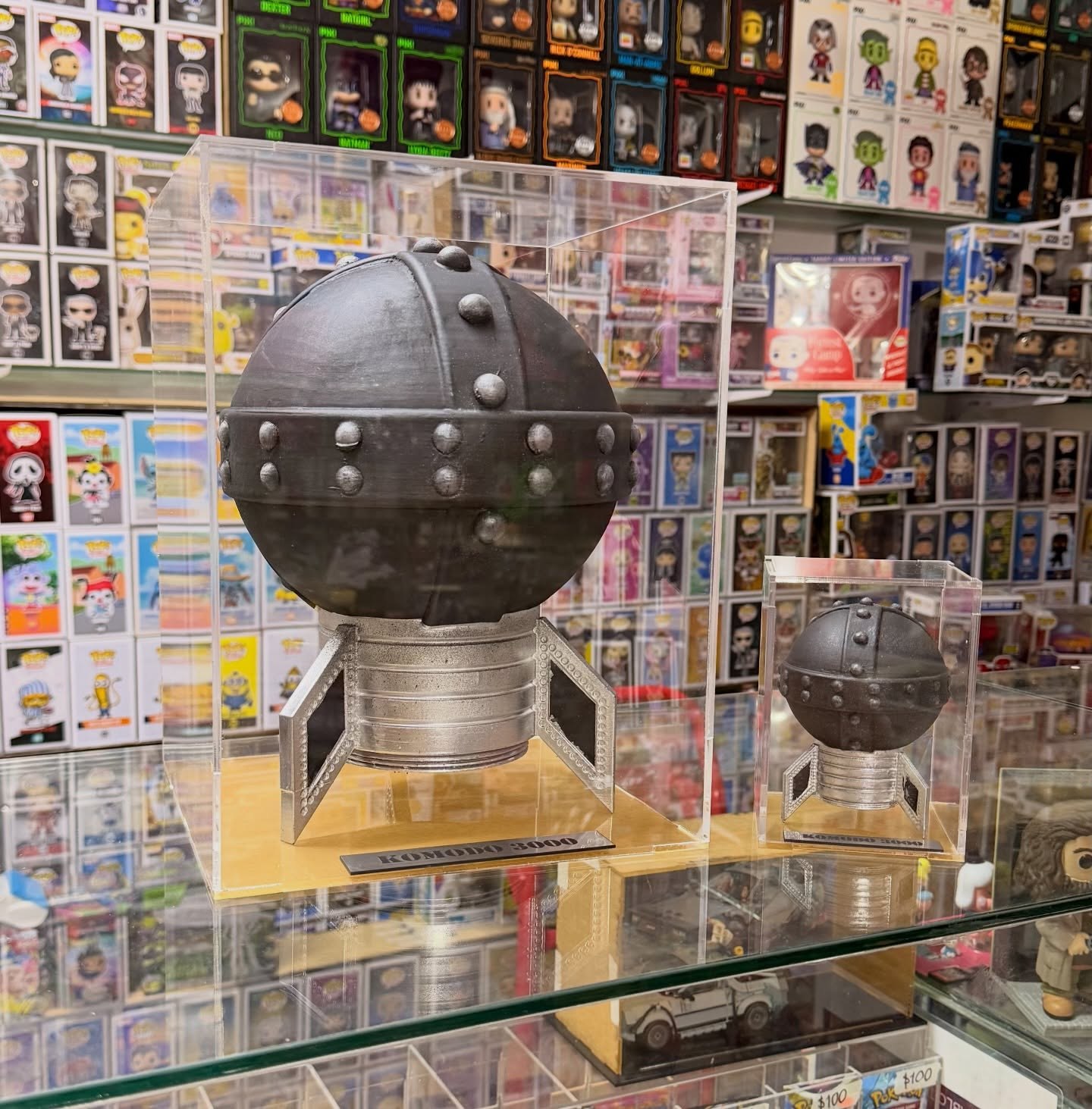
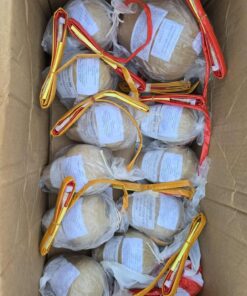
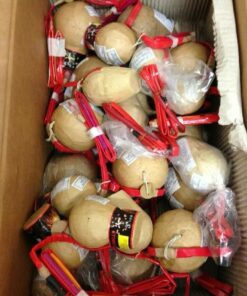
Komodo 3000
$550.00
What real shells can do is create a moment that feels like daylight. A large titanium salute or a big white strobe shell will light the ground, throw sharp shadows, and leave everyone blinking for a second. Pros use this on purpose in finales: a wall of white comets or crackling shells floods the sky, and the crowd briefly loses its night vision. That afterimage is probably where the Komodo legend gets its emotional truth.
Every few years a firework shows up online with a reputation larger than any real shell could earn. The Komodo 3000 is one of them: a name passed around in comment threads, joke videos, and late-night group chats, usually with claims that it turns night into day or blinds anyone who looks at it directly.
So what is actually going on with it? This review treats the legend as a legend. It also uses real pyrotechnic science to explain what a device like this would need to do and why the most extreme claims fall apart. If you came looking for a shopping recommendation, you will get an honest answer. If you came for the lore, you will get that too, along with safety information that applies to every aerial shell you might actually buy this summer.
Origins and Cultural Legacy of the Komodo 3000
I could not find a manufacturer, a product listing from a licensed retailer, or a regulatory filing for anything called the Komodo 3000. That matters. Real consumer fireworks in the US carry a manufacturer name, a 1.4G classification, and CPSC-required warning labels. The Komodo 3000 has none of that paper trail. As far as I can tell, it lives almost entirely in internet humor.
Its staying power makes sense when you look at what it pokes fun at. Fireworks marketing is famously over the top. Real products are called things like “Absolute Destruction,” “Excessive Force,” or “Neighbor Hater,” and the box art often promises far more than a 60-gram cake can deliver. A firework so powerful that it has its own safety mythology is the logical end point of that culture.
The joke follows a familiar pattern. Someone posts a dramatic warning, others add increasingly absurd “experiences,” and the story grows with each retelling. Nobody needs to prove the product exists for the bit to work. That is also why you should be skeptical of any listing that claims to sell the real thing. Anything sold under this name is either a novelty rebrand or a scam.
Technical Specifications and Pyrotechnic Composition of komodo 3000
With no official spec sheet, the useful exercise is to ask what a firework matching the Komodo 3000’s reputation would require, and compare that to how real shells are built. Every aerial shell has the same basic anatomy:
- Lift charge: A measured amount of black powder at the base that launches the shell from the mortar tube.
- Time fuse: A delay that lights as the shell leaves the tube and sets off the burst at the right height.
- Burst charge: The internal charge that breaks the shell open and scatters its contents.
- Stars: Pellets of pyrotechnic composition that make the visible color and light.
The legendary version supposedly does all of this at a scale that lights up the whole sky. The two subsections below look at what that would demand chemically and mechanically.
Chemical Compounds and Color Intensity of komodo 3000
Firework color comes from metal salts heated in a flame. Strontium compounds give red, barium gives green, copper gives blue, sodium gives an intense yellow-orange, and magnesium or aluminum powder produces brilliant white light and sparks. Blue is notoriously the hardest color to get right because copper compounds break down if the burn runs too hot.
Brightness comes mostly from the metal fuel. Magnesium and aluminum burn extremely hot and give off the dazzling white flashes you see in salutes and strobes. A shell meant to imitate daylight would need a huge load of these metals, which is exactly the kind of composition regulators limit in consumer products. There is no secret compound that makes a firework rival the sun. More light means more fuel, more heat, and more risk.
Explosive Yield and Lift Charge Mechanics
Lift is about physics, not magic. Black powder burning in a confined tube creates gas pressure that pushes the shell upward. Bigger shells need bigger tubes and more powder, and the burst height grows roughly with shell diameter. A professional 3-inch shell typically breaks a few hundred feet up. Large display shells go much higher.
US consumer rules cap reloadable mortar shells at 1.75 inches in diameter with no more than 60 grams of composition per shell. Anything that could actually brighten a whole neighborhood would be a professional 1.3G display shell. That requires licensing, permits, and trained operators. A backyard product with Komodo-level output simply cannot be legal for consumer sale.
Visual Performance and Night-to-Day Transition of komodo 3000
The signature claim is that the sky goes from night to day. Taken literally, that is impossible for any firework. Daylight puts out an enormous amount of light spread evenly over everything you can see. A firework is a brief point source a few hundred feet up, and its brightness drops off sharply with distance.
What real shells can do is create a moment that feels like daylight. A large titanium salute or a big white strobe shell will light the ground, throw sharp shadows, and leave everyone blinking for a second. Pros use this on purpose in finales: a wall of white comets or crackling shells floods the sky, and the crowd briefly loses its night vision. That afterimage is probably where the Komodo legend gets its emotional truth.
If that “day for a second” effect is what you’re chasing, look at professional shows that use heavy white and gold shells, or at consumer cakes labeled with brocade, titanium, or strobe effects. They won’t change the time of day. They will give you the gasp the meme describes, and nobody has to file an insurance claim.
Safety Protocols and Launch Environment Requirements
The Komodo 3000 firework may be fictional, but the injuries tied to real fireworks are not. Each year the US Consumer Product Safety Commission reports thousands of emergency room visits linked to fireworks, mostly to hands, fingers, head, face, and eyes. Most happen in the weeks around July 4th. The most common causes are predictable: relighting duds, holding lit devices, and standing too close.
A safe launch setup starts with the ground. You want a hard, level surface, a wide clearance from trees, buildings, power lines, and dry grass, and a stable base for anything with tubes. Cakes can tip over, and a tipped cake fires shells sideways into the crowd. Keep a hose or full bucket of water nearby, and soak spent devices before you throw them out.
The Blindness Risk and Eye Protection
The joke about the Komodo going blind has a real basis, just not the one the meme suggests. Looking at a bright shell from a proper distance will not damage your eyes. Eye injuries come from projectiles: fragments, misfires, and shells that burst too low or fly toward spectators. Bottle rockets and handheld devices are frequent culprits.
Anyone lighting fireworks should wear safety glasses rated to ANSI Z87.1, and spectators should stay well back. If an eye injury does happen, do not rub it, rinse it, or try to remove debris. Cover it loosely and go to an emergency room right away.
Safe Distance and Noise Mitigation
For professional displays, a common guideline in NFPA 1123 is 70 feet of spectator distance per inch of shell diameter. That works out to 210 feet for a 3-inch shell. For consumer products, follow the distance printed on the label and add margin.
Noise deserves more attention than it gets. Salutes and loud reports produce impulse sound that can damage hearing at close range. Foam earplugs help a lot for both operators and kids. Think about pets, veterans, and neighbors too. Choosing fountains and color-heavy cakes over report-heavy items cuts down the noise without cutting the fun.
Comparative Analysis with Standard Display Shells
Here is how the legend compares to products you can actually find:
| Feature | Komodo 3000 (legend) | Consumer 1.4G Cake | Professional 1.3G Shell |
|---|---|---|---|
| Legal for public sale | No verifiable product | Yes, where state law allows | No, licensed operators only |
| Composition limit | Unspecified, “unlimited” | Up to 500g total per cake | Far higher, regulated by permit |
| Burst height | “The sky itself” | Roughly 100-200 ft | Several hundred ft and up |
| Brightness claim | Turns night to day | Bright, localized | Can briefly light a whole field |
| Safety documentation | None | CPSC labels required | Permits, site plans, ATF rules |
The honest takeaway is that the best version of the Komodo 3000 experience already exists. It is called a professional fireworks show. Consumer cakes are the realistic choice for a backyard, and quality varies a lot by brand, so read reviews and watch demo videos from reputable retailers before buying.
Final Verdict on the Ultimate Pyrotechnic Experience
As a product, the Komodo 3000 earns no rating, because there is no verified product to rate. As a piece of fireworks culture, it’s a good joke. It pokes fun at an industry that already names its cakes like action movies, and it captures the real feeling of a finale so bright you lose your night vision.
If you want that feeling, skip any shady listing using the name. Go to a licensed public display, or put together a backyard lineup of well-reviewed 1.4G cakes heavy on white strobes and titanium effects. Keep distances generous, wear eye protection, have water ready, and never relight a dud.
The best firework this year will not be a mythical Komodo. It will be the one that gets an “ooh” from the whole crowd and sends everyone home with all their fingers.
Be the first to review “Komodo 3000”
Related products
FIRECRACKER
FIREWORKS
FIRECRACKER
FIREWORKS
MORTAR RACKS
FIRECRACKER
FIREWORKS
Reviews
There are no reviews yet.