
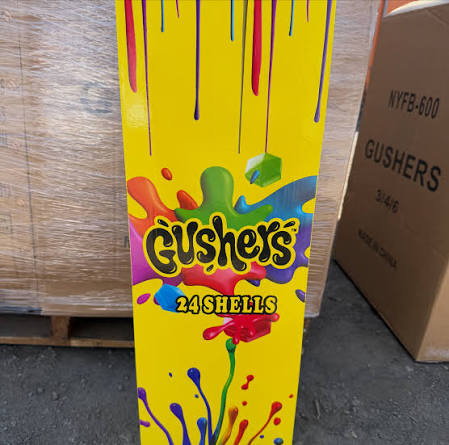
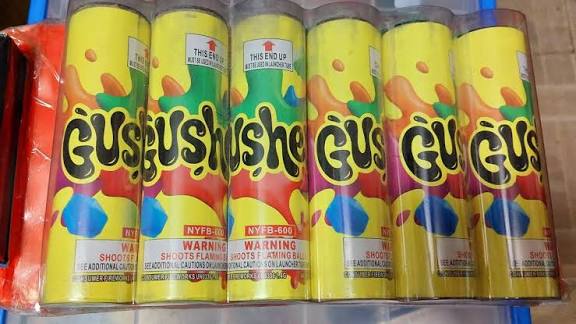


Some fireworks earn their spot in a show because they’re loud. Others earn it because people keep talking about them on the drive home. The gushers firework tends to land in the second group, mostly because of how it fills space rather than how hard it hits.
Before you add one to your cart, though, it helps to know what you’re actually buying. Products sold under the “Gushers” name vary by manufacturer and retailer, and the effect printed on one label won’t always match another. A fountain-style gusher behaves very differently from an aerial cake with a similar name, and mixing them up can throw off your whole lineup.
What follows is a practical breakdown of how these items look, sound, and fit into a backyard or neighborhood display. I’ll also cover what buyers commonly praise and complain about, where to place them, how to fire them safely, and whether they justify the price. I haven’t invented test numbers here, so wherever a spec matters, I’ll point you to the label on the box in front of you, which is the only source that counts.
The Gushers Firework Experience: Visuals and Sound Profile
The name tells you most of the story. A gusher is built to pour out effect in a steady, dense stream rather than in a single sharp event. If you’ve ever watched a ground fountain push up a column of sparks that keeps swelling for a while, that’s the general idea, and the aerial versions apply the same “keep it coming” philosophy to repeated shots.
Sound is usually secondary. Most gusher-style items lean on crackle, hiss, and fizz rather than big reports. That makes them friendlier for mixed crowds with small kids or nervous pets, though it also means they won’t deliver the chest-thumping finish some people expect.
Color Palette and Burst Patterns
Expect a mix of gold, silver, and colored sparks, often with crackling tips or glitter that hangs briefly before fading. Fountain versions typically shift colors partway through, so a single unit might open in gold, move to red or green, and close with a crackling burst.
Aerial gushers more often fire in fans or rapid sequences of small breaks. The pattern is about volume and fill, not precision. If you want crisp, symmetrical peonies, this isn’t the product for that job.
Duration and Timing Specifications
Duration is where labels matter most. Fountains in this category commonly run somewhere between 30 seconds and a little over a minute, while cake versions depend entirely on shot count. Check the box for listed duration and shot count before you plan your timing, and time one unit with your phone if you’re buying several identical pieces for a bigger show.
Analyzing Consumer Feedback and Performance Ratings
Reading through retailer reviews and community forum threads for gusher-type products, a few themes come up again and again. I’d treat these as patterns rather than hard data, since review samples are small and often mix different brands under similar names.
What buyers tend to praise:
- Longevity on the ground: Fountain versions get credit for running longer than people expect for the price.
- Crowd appeal: The steady, swelling effect holds attention, especially for younger viewers.
- Quiet-ish operation: Fewer loud reports make them easier to fire in tighter neighborhoods.
What buyers tend to complain about:
- Inconsistent performance between units: Some reviewers report one piece pouring beautifully while another from the same pack sputters out early. Storage humidity is a likely culprit.
- Height expectations: People who assumed an aerial item sometimes feel let down by a ground-level effect.
- Naming confusion: Multiple products share the “Gushers” label, so a glowing review may describe a completely different item from the one you bought.
The takeaway from all that feedback is simple: read the product code and effect description, not just the name. When reviews mention a specific SKU or item number, match it against yours before trusting the rating.
Strategic Placement Within Your Firework Show
Where you put a gusher matters more than with most items. Because its strength is sustained fill rather than one dramatic moment, it can either carry a quiet stretch of your show or get completely lost behind bigger aerial pieces.
Using Gushers Firework as a Mid-Show Highlight
The middle of a show is where attention usually dips. People have seen the opening shots, the finale is still a ways off, and the gaps between items start to feel long. A gusher works well here because it buys you 30 to 60 seconds of continuous action while you reload or move to the next fuse.
A simple approach for a 15-minute backyard display:
- Open with two or three aerial cakes to grab attention.
- Around minute five or six, light a fountain-style gusher front and center.
- While it runs, prep your next aerial item a safe distance away.
- Light the next cake just as the gusher fades so there’s no dead air.
That handoff is the whole trick. The audience never sees a pause, and you get breathing room.
Pairing with Complementary Effects Of Gushers Firework
Gushers look best next to effects that contrast with them. Pair a gold fountain with a colored aerial cake firing above it, and you get layers: ground-level shimmer below, bursts overhead. Two fountains of different colors spaced a few yards apart can also create a wall effect that looks far more expensive than it is.
Avoid stacking a gusher next to another long crackling fountain with the same color profile. They’ll blur into one muddy effect, and you’ll have spent twice the money for half the impact.
Safety Protocols and Ideal Launch Conditions
Every safety rule printed on the box applies here, and fountain-style items carry one specific risk people underestimate: tipping. A fountain that falls over mid-burn sprays sparks sideways at ground level, right toward spectators. Plant it on a flat, hard surface like a piece of plywood, and if the base feels narrow, brace it with bricks or secure it to the board.
A short checklist before you light anything:
- Read the label distances: Follow the manufacturer’s stated spectator distance, and add extra if your space allows.
- Check the wind: Steady wind bends the spark column. Position the audience upwind.
- Clear the area: Dry grass, leaves, and parked cars don’t belong anywhere near the launch zone.
- Keep water ready: A full bucket and a connected hose, not just one or the other.
- Never relight a dud: Wait at least 20 minutes, then soak it in water before disposal.
- One person lights: That person stays sober and wears eye protection.
Ideal conditions are a calm, dry evening with low humidity. Damp storage is one of the most common reasons fountains underperform, so keep your stock sealed and indoors until show time. Also confirm your local regulations before buying, since consumer firework rules differ widely by state, county, and city, and some areas ban ground fountains during dry seasons.
Value Assessment: Is It Worth the Investment?
Value with gushers comes down to cost per second of effect. A fountain that runs close to a minute often delivers more watchable time than a small aerial cake at a similar price, which makes it one of the more efficient buys for filling a show. Where it falls short is impact: if you’re judging by gasps per dollar, a single good aerial cake will usually win.
So the real question is what your show needs. If you have plenty of loud aerial pieces and keep running into awkward gaps, a few gushers are a smart, cheap fix. If your budget is small and you want one memorable moment, put that money into a quality cake instead.
A few ways to get better value:
- Buy in multi-packs when the same item comes bundled, since per-unit pricing usually drops.
- Shop after holidays, when retailers often discount leftover stock.
- Test one unit early if you’re buying in bulk, so you know whether the batch performs well before show night.
My honest read: the best gushers firework buys are the ones bought with a specific slot in mind. Purchased randomly, they’re filler. Purchased for a planned mid-show handoff, they punch above their price.
Final Verdict on the Gushers Firework Performance
Gushers aren’t headliners, and they don’t pretend to be. Their job is to keep the sky, or the ground, busy with color and crackle while your bigger pieces wait their turn. Used that way, they make a modest budget look generous and keep your audience from checking their phones between shots.
The main things to remember are practical. Match the product code to the reviews you’re reading, since the name alone covers several different items. Brace fountain versions so they can’t tip, store them dry, and follow the label distances without cutting corners. Then place them where your show tends to sag, ideally paired with a contrasting aerial effect overhead.
If you plan your lineup on paper first and give each gusher a defined role, you’ll get far more out of it than buyers who toss one in at random. Pick your slot, time your handoff, and let the steady pour do what it does best: keep the show moving.
| 6'' CANISTER | 5 PIECES, 10 PIECES, 15 PIECES, 24 PIECES, 48 PIECES, A CASES |
|---|
Be the first to review “Gushers Firework”
Related products
FIREWORKS
FIRECRACKER
FIREWORKS
FIREWORKS
FIRECRACKER


FIREWORKS
Reviews
There are no reviews yet.