
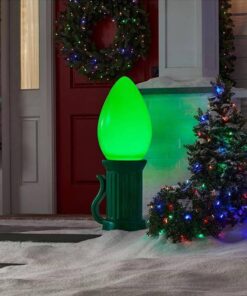
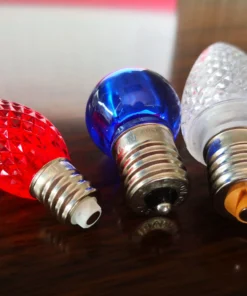


Most people pack their big, christmas lights c9 away in January and forget about them until Thanksgiving. That’s a waste of some of the most recognizable lighting ever made. The same oversized bulbs that outline rooflines in December can turn a house into a red, white, and blue landmark on the Fourth of July, and they do it with a bold, retro character that thin string lights and projector gimmicks can’t match.
Here’s the catch: summer is not winter. A setup that worked in 20-degree weather may behave very differently under a 95-degree sun, afternoon thunderstorms, and humidity that creeps into every socket. Colors that looked fine against snow can look washed out at 9 p.m. in July when the sky still holds some light. Picking the right bulbs and installing them properly makes the difference between a display that looks professional and one that looks like you forgot to take down your Christmas decorations.
Below is a practical guide to evaluating, buying, hanging, and storing C9s for Independence Day.
The Evolution of C9 Christmas Lights for Patriotic Displays
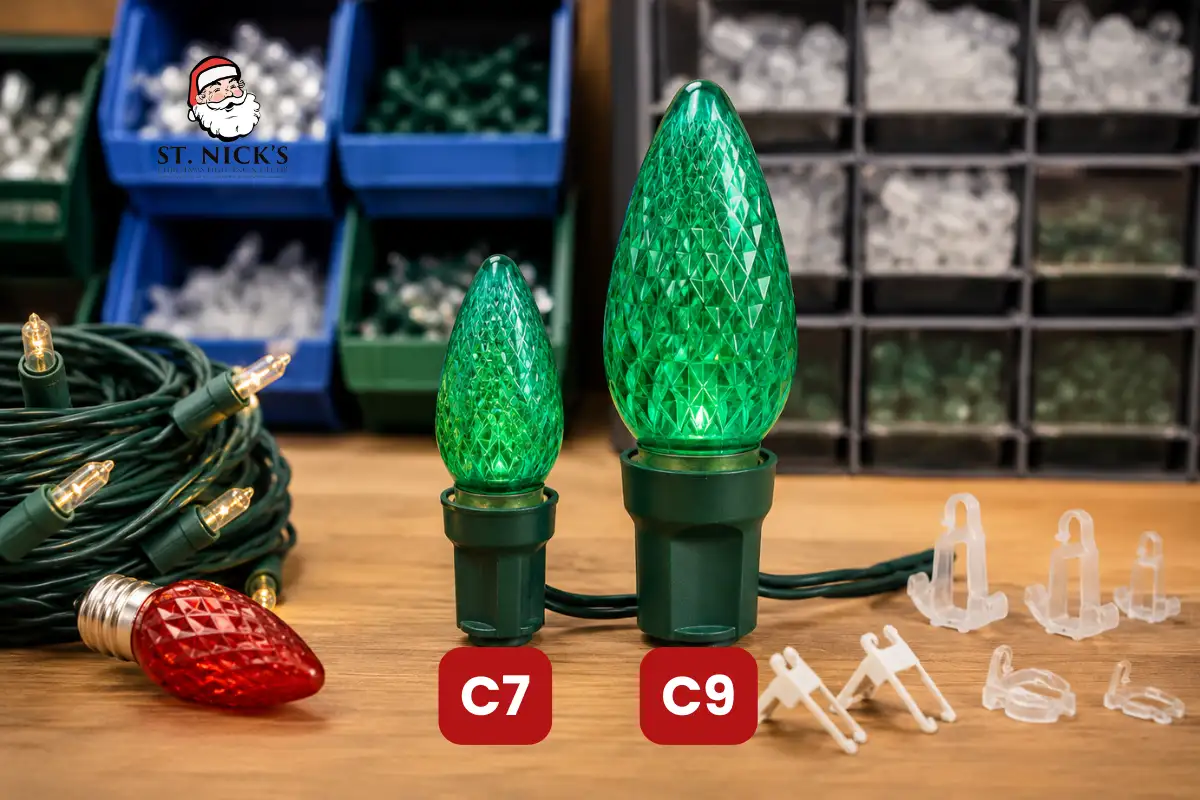
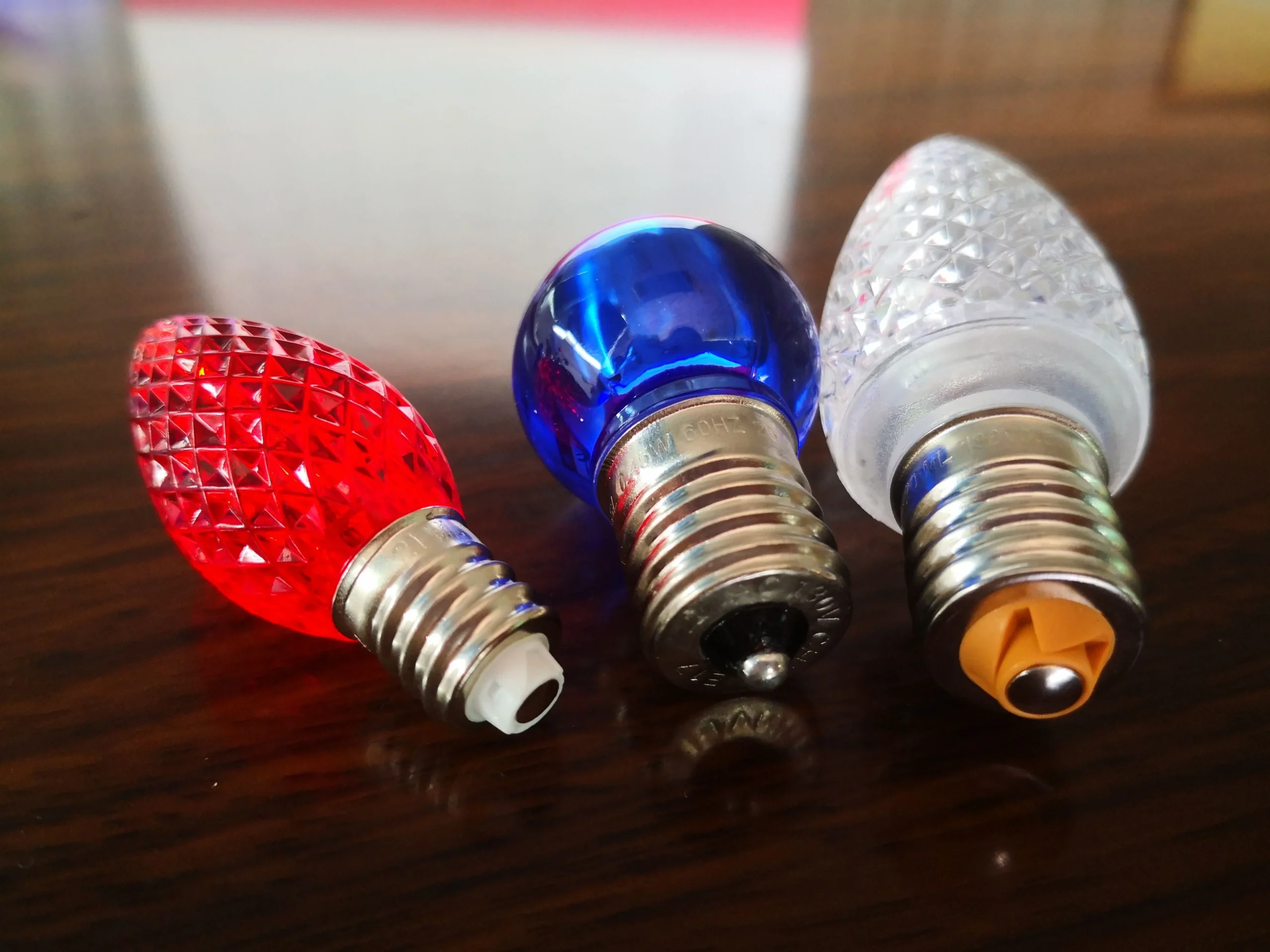
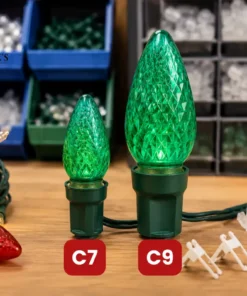
The C9 is one of the oldest bulb shapes still in common use. The name comes from a simple code: “C” for the cone or candle shape, and “9” for the diameter in eighths of an inch, so a C9 is about 1.125 inches across. Its smaller sibling, the C7, is the same idea at 7/8 of an inch. These bulbs became a staple of American holiday decorating in the mid-20th century, when strings of glass incandescent bulbs on heavy wire lined porches and storefronts.
For decades, people used them almost exclusively in December. That started to change as LED versions arrived and made the bulbs cheap to run and safe to leave on for hours. Once you weren’t paying for 7 watts per bulb, keeping a string up for a summer holiday became reasonable.
Patriotic displays were a natural fit. The C9’s large surface reads clearly from the street, and its classic shape pairs well with bunting, flags, and porch railings. Many homeowners now treat christmas lights c9 strings as year-round infrastructure: the wire stays mounted on the roofline, and they swap bulbs by season. Red and green in December, red, white, and blue in July, maybe orange and purple in October.
Reviewing C9 Bulbs: LED vs. Incandescent for Summer Use
If you already own incandescent C9s, you can use them in July. Whether you should is another question. Here’s how the two types compare for a summer display:
| Factor | Incandescent C9 | LED C9 |
|---|---|---|
| Power per bulb | About 7 watts | Roughly 0.5 to 1 watt |
| Heat output | Noticeably warm to the touch | Barely warm |
| Bulb material | Glass, painted or ceramic-coated | Usually plastic or shatterproof acrylic |
| Lifespan | Often a few thousand hours | Often tens of thousands of hours |
| Look | Soft, warm glow | Brighter, crisper, more saturated |
For most people, LED is the better choice in summer. The incandescent glow has real charm, but the heat, power draw, and fragility work against you once temperatures climb.
Durability and Heat Resistance in July Weather
Incandescent bulbs generate their own heat, and on a roof that’s already baking, that adds up. Painted glass bulbs can also fade in strong UV, and a sudden cold rain hitting a hot glass bulb can crack it. Shatterproof LED bulbs shrug off hail, falling branches, and the occasional stray firework spark far better.
Look for bulbs and strings rated for outdoor use, and check that the bulb has a sealed base or gasket. Summer storms drive water sideways into sockets in a way December drizzle rarely does.
Color Purity: Achieving True Red, White, and Blue
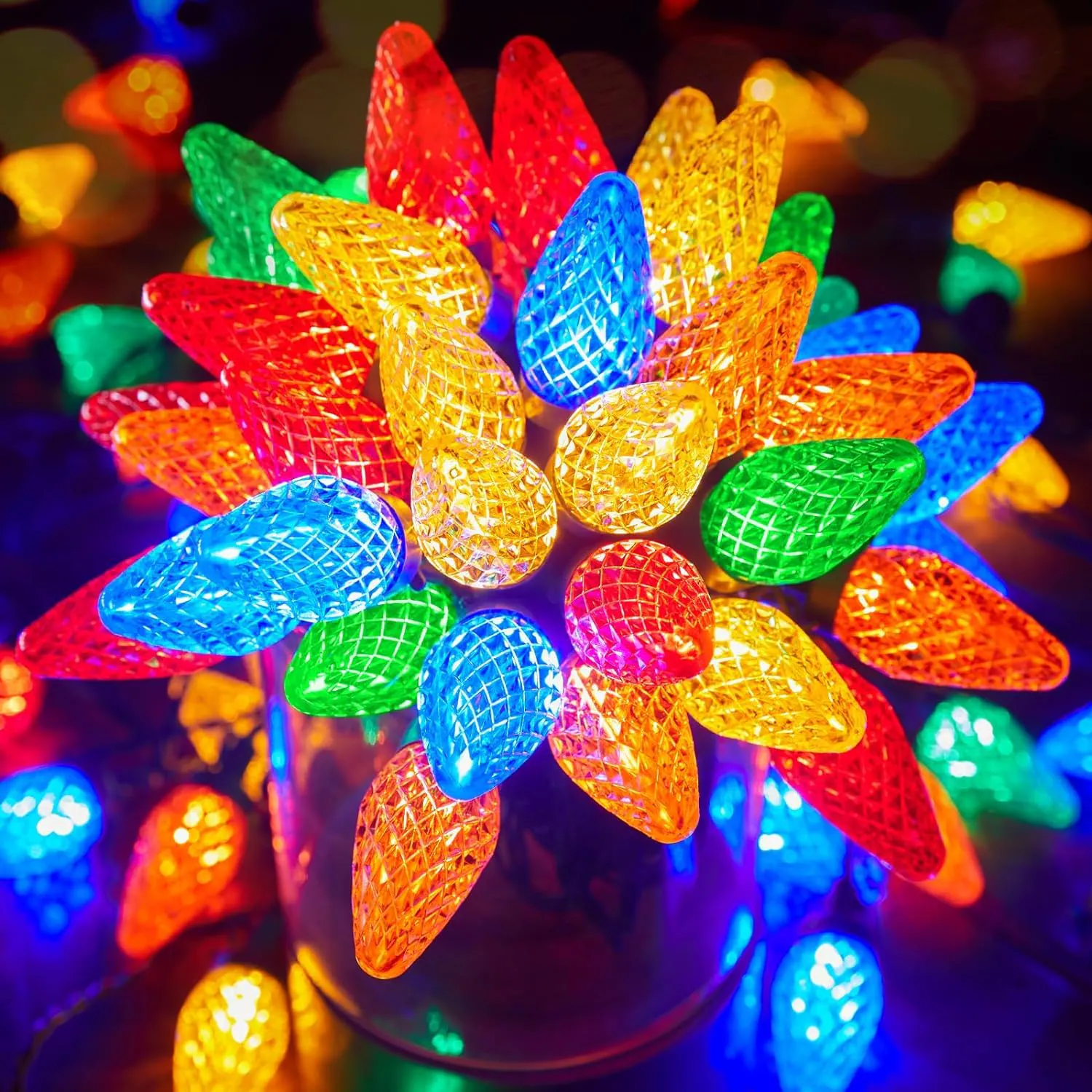
This is where cheap bulbs give themselves away. Red is usually easy, but blue often shifts toward purple, and “white” can range from yellowish warm white to harsh bluish cool white. For a patriotic display, pick a cool or pure white so it contrasts sharply with the red. A warm white sitting between red and blue tends to look muddy.
Buy one sample bulb of each color before ordering in bulk, and test them outside at dusk. That’s when you’ll actually be viewing the display, and it’s when weak blues fall apart.
Choosing the Right C9 Specifications for Your Property
Start with measurements, not bulbs. Walk your roofline, gutters, porch rails, and walkway with a tape measure and write down each run. Add a few feet per run to reach your outlet, since the lead wire has to get there too. Rounding up is smart; splicing a short section later is a hassle.
Next, decide where the lights will go. Rooflines and gutters suit C9s best because their size shows from a distance. For low railings or shrubs close to the sidewalk, C7s or a mix can look less bulky. Large two-story homes almost always benefit from C9s on the upper roofline.
A few specs matter more than people expect:
- Base type: C9s typically use an E17 intermediate base. Make sure replacement bulbs match your sockets.
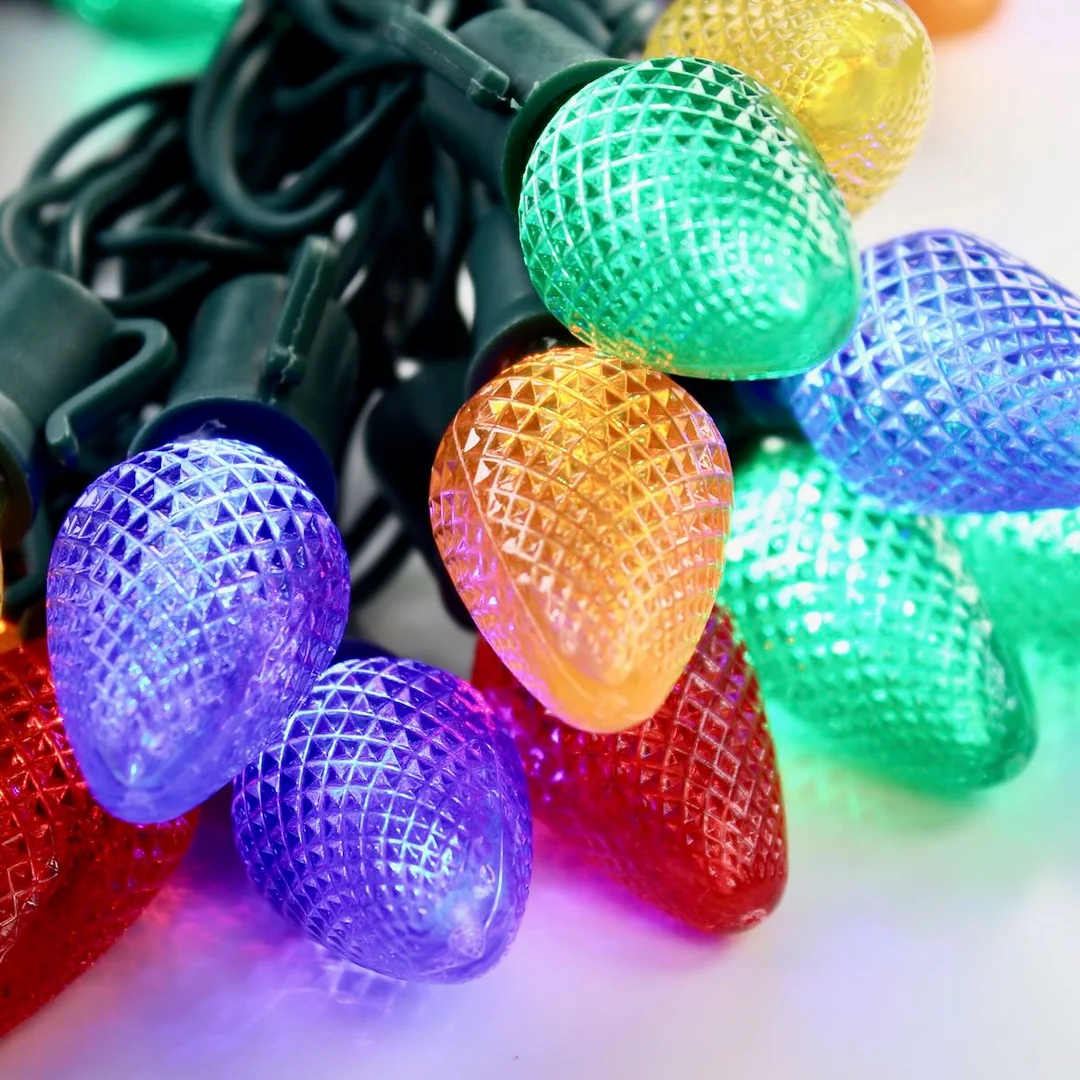
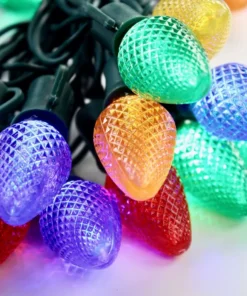
- Bulb style: Smooth bulbs give crisp, solid color. Faceted bulbs sparkle more and hide minor color inconsistencies.
- Connectable length: Check how many strands the manufacturer allows end to end. LED strings usually allow far more than incandescent ones.
- Commercial vs. retail grade: Commercial-grade sets with heavier wire and better sockets cost more but hold up for years. If you plan to use them for multiple holidays, they’re worth it.
Selecting Wire Colors and Socket Spacing Christmas lights c9
Wire color should disappear against your house. Green wire is the default for Christmas but stands out on a white fascia in summer, when there are no wreaths or garland to hide it. White wire suits white trim, brown or black works on darker trim or brown gutters. Since the bulbs will likely stay up between holidays, choose the wire for your house, not the season.
Socket spacing is usually 12, 15, or 18 inches. Twelve inches gives a dense, bright line ideal for a red, white, and blue pattern because the colors read as a continuous band. Fifteen inches is a good middle ground for average homes. Eighteen inches works on long rooflines viewed from far away, but on a three-color pattern it can make each color feel scattered.
Step-by-Step Installation for a Professional 4th of July Look
A clean install depends on prep. Give yourself a dry afternoon at least a week before the holiday, and set up early in the day before the roof heats up.
- Lay out the strings on the ground. Screw in all bulbs and plug in each strand to confirm it works before anything goes up a ladder.
- Set your color pattern on the ground first. Repeating red, white, blue is easiest to fix at ground level, not 20 feet up.
- Start at the power source. Work outward from the outlet so the lead reaches cleanly and you don’t end up with excess wire at the plug end.
- Keep sockets facing the same direction. All bulbs pointing straight up, or all angled outward, is what separates a pro look from an amateur one.
- Pull the wire snug between clips. Sagging wire is the most visible flaw from the street.
- Tuck the excess. Coil any leftover wire neatly and hide it behind a downspout or under an eave.
Use a fiberglass ladder, have someone hold it, and never work on a wet roof.
Securing Roofline Clips and Power Management Christmas lights c9
Use plastic all-in-one clips that grip gutters or shingles, and place one at every socket. Never use nails or staples, which can pierce the wire insulation and create a shock hazard. Proper clips also mean you can leave the wire up after July with minimal effort.
For power, plug into a GFCI-protected outdoor outlet and use outdoor-rated extension cords. A standard household circuit is 15 amps, and a common rule is to keep continuous loads under 80 percent, roughly 1,440 watts. A single 25-bulb incandescent strand at 7 watts each draws 175 watts, so a big incandescent roofline can strain a circuit quickly. LEDs make this a nonissue for most homes. Elevate connections off the ground and wrap them with a weatherproof cover, since summer storms hit hard and fast. A simple outdoor timer saves you from forgetting to switch them off.
Creative Patterns and Sequencing for Independence Day
The classic choice is a straight repeat: red, white, blue, red, white, blue. It’s clear, recognizable, and works on any house. But you have more options than that, and some look far more intentional.
Block patterns use three or four of the same color in a row before switching. On a long roofline with 12-inch spacing, groups of four create bold stripes that read like a flag from the street. Another approach is to assign colors by architecture: red along the main roofline, white on the porch, blue on the walkway or around windows. This makes a house look designed rather than simply decorated.
If you want motion, smart LED C9 strings now offer app-controlled color changes and chase effects. A slow fade from red to white to blue feels festive without looking like a casino. Fast flashing tends to look cheap, and on a holiday full of actual fireworks, a calm, steady display often stands out more.
One overlooked trick: mix in a few warm white bulbs along a porch ceiling where people actually sit. It keeps the outdoor space comfortable while the roofline handles the patriotic punch.
Maintenance and Post-Holiday Storage Tips Christmas Lights c9
C9 setups can last many years with a bit of care. A few minutes after the holiday saves money and frustration the next time you set up.
- Check burned-out bulbs before storing. Mark or replace them so you’re not troubleshooting in November.
- Wipe bulbs clean. Summer leaves pollen, dust, and bug residue on them, which dims color over time.
- Dry everything fully. Store nothing damp; moisture in sockets leads to corrosion.
- Sort bulbs by color. Labeled bins or egg cartons keep red, white, and blue separate and ready for next summer.
- Wrap wire loosely. Coil it around a cardboard reel or a cord winder instead of bunching it, which strains the sockets.
If your wire stays mounted year-round, simply pull the bulbs and leave the empty sockets in place. Many decorators do exactly this: swap colored bulbs in and out with each holiday and leave the hard part alone. Inspect the wire once a season for cracked insulation or loose clips, especially after heavy storms.
Store bulbs indoors in a cool, dry closet or basement. Attics and garages can get extremely hot in summer, which can warp plastic and weaken connections over time.
The real takeaway is that C9s aren’t just Christmas lights anymore. Buy LED bulbs with true colors, measure carefully, match wire to your trim, use proper clips, and respect your circuit limits. Do that, and the same setup will carry you from the Fourth of July through Halloween and into December with little more than a bulb swap. This year, pick up a sample pack of red, white, and blue bulbs, test them at dusk, and give your neighbors something worth looking at between the fireworks.
Be the first to review “Christmas Lights c9”
Related products

FIREWORKS

FIRECRACKER
FIREWORKS
FIRECRACKER
FIREWORKS
FIREWORKS


FIREWORKS

FIREWORKS
Reviews
There are no reviews yet.