
Cherry Bomb Firework
Price range: $50.00 through $499.00
Anyone who heard a real cherry bomb tends to describe the sound the same way. It was not a crack but a deep, chest-thumping boom with a sharp leading edge. Strong confinement plus fast-burning powder produced a short, intense pressure wave instead of a drawn-out pop.
The first time most people hear about a cherry bomb, it comes with a warning attached. A parent or grandparent mentions blowing a mailbox apart in 1962, or a neighbor’s toilet that never worked right again, and the story ends with “you can’t buy those anymore.” That half-legend, half-confession quality is what makes the cherry bomb firework so interesting. It was cheap and simple, and for a few decades it was sold over the counter at roadside stands across the United States.
It was also dangerous enough that federal regulators eventually decided it had no place in consumer hands. The small red ball sits at an odd crossroads of chemistry, childhood mischief, rock and roll, and consumer protection law. Understanding it explains a lot about why American backyard fireworks look the way they do today. You see it in the 50-milligram firecracker limit, the bright warning labels, and the “salute” products that only sound like their ancestors.
Origins and the Evolution of the Red Sphere
Firecrackers came to America with Chinese imports in the 1800s, and by the early 20th century domestic manufacturers were producing their own loud novelties for Fourth of July celebrations. The cherry bomb grew out of that market as a heavier hitter. A typical paper-wrapped firecracker crackled, while the cherry bomb was built to boom.
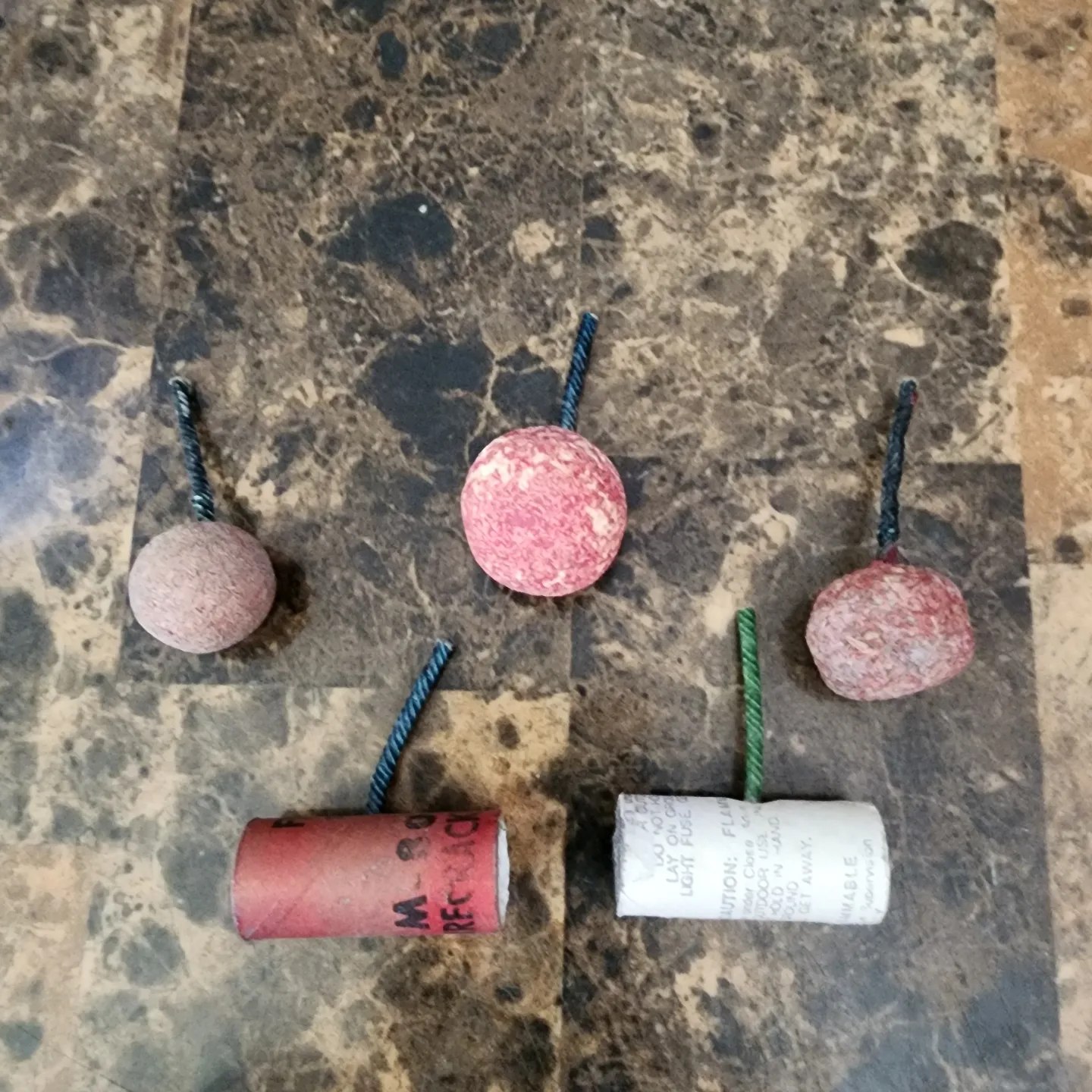
Its round shape was not just decoration. A sphere packs a charge inside a tight, evenly stressed casing, which helps the device build pressure before it ruptures. The red coating and protruding green fuse made it look like its namesake fruit. That gave it a friendly, almost candy-like appearance that critics would later point to as part of the problem.
By the 1940s and 1950s, cherry bombs were a standard item in fireworks catalogs and at seasonal stands. They sold for pennies apiece, often in small boxes or bags. That price put real explosive power within reach of almost any kid with allowance money.
Early Manufacturing and Design Standards
Classic cherry bombs were made from a small hollow sphere, usually two pressed halves of pasteboard or heavy paper, filled with explosive powder. Makers sealed the shell and then coated it with a mixture of sawdust or fine fiber bound with glue. That crust added strength and gave the surface its slightly rough texture. A coat of red paint went on last.
The fuse was usually a green, waterproof “cannon” or visco fuse. Because it was coated, it would keep burning even underwater, and that one detail fed decades of pond pranks and plumbing disasters. Most finished cherry bombs measured roughly an inch to an inch and a half across.
Manufacturing standards in this era were loose by modern measure. There was no federal cap on how much powder a consumer firecracker could hold. Quality varied from maker to maker, and so did fuse burn times, which is one reason the devices injured so many people.
The Anatomy and Performance of the Cherry Bomb
What separated a cherry bomb from ordinary firecrackers was not size alone but containment. A paper firecracker vents much of its energy because its casing gives way early. The cherry bomb’s sturdy coated shell held on longer, so the pressure inside climbed higher before the shell burst. That produced a sharper, more violent result.
Performance in practical terms meant three things: a loud report, a visible flash, and enough force to damage what it was sitting on or inside. A cherry bomb set under a tin can would launch it. One dropped into a metal mailbox could buckle the door. Setting one off in a clenched hand could cost fingers. That last outcome turns up again and again in mid-century emergency room accounts.
The fuse added to the danger. Burn times were often only a few seconds and not always consistent. If a fuse burned faster than expected, the person lighting it had almost no time to react.
Chemical Composition and Explosive Power
Early cherry bombs often relied on flash powder, a mixture of an oxidizer and a fine metal fuel. Common recipes paired potassium chlorate or potassium perchlorate with powdered aluminum, sometimes with sulfur. Some cheaper versions used black powder, which burns more slowly and produces a duller result.
Flash powder is the key to the cherry bomb’s reputation. It burns extremely fast, and when confined it behaves much more like an explosive than a simple flame. Chlorate-based mixtures were also notoriously sensitive to friction and shock. That made them hazardous to manufacture, store, and transport, not just to use.
Accounts of how much powder vintage cherry bombs held vary, and many were never labeled at all. What is clear is that they carried far more than the 50 milligrams now allowed in legal consumer firecrackers. That gap is the whole story of why a modern “cherry bomb” lookalike feels like a polite cough by comparison.
The Distinctive Report and Acoustic Signature Of cherry bomb firework
Anyone who heard a real cherry bomb tends to describe the sound the same way. It was not a crack but a deep, chest-thumping boom with a sharp leading edge. Strong confinement plus fast-burning powder produced a short, intense pressure wave instead of a drawn-out pop.
Where the device went off changed the sound a lot:
- Open air: a heavy, flat bang that carried for blocks
- Under a can or bucket: a louder, more metallic report as the container amplified and launched
- Underwater: a muffled thud, often with a column of water shooting upward
- Inside pipes or plumbing: a contained blast that could crack porcelain and rupture fittings
That acoustic signature became part of the cherry bomb’s identity. Neighborhood kids could tell the difference between one and a string of firecrackers from across town.
Cultural Iconography and Media Presence
Few fireworks have a pop culture footprint like the cherry bomb’s. The name alone carries a sense of rebellion, which is why musicians grabbed it. The Runaways released “Cherry Bomb Firework” in 1976, and the song became a punk-adjacent anthem. John Mellencamp used the same title for a very different, nostalgic hit in 1987. Neither track is really about fireworks, but both rely on the image of something small, bright, and explosive.
The device also became shorthand for teenage mischief in film, TV, and comics. Mid-century stories cast the cherry bomb in a recurring role: flushed down a school toilet, dropped in a principal’s trash can, tossed into a creek to stun fish.
Rock lore added its own chapter. Stories of musicians blowing up hotel toilets with cherry bombs, most famously tied to The Who’s drummer Keith Moon, have been retold so often that it’s hard to separate fact from embellishment. That blur is fitting. A lot of what people “know” about cherry bombs is folklore passed down by people who were twelve when it happened.
Regulatory Shifts and the 1966 Consumer Ban
By the 1960s, the injury pattern was hard to ignore. Hand and eye injuries, burns, and hearing damage tied to powerful firecrackers showed up every July. Children made up a large share of the victims.
Congress responded with the Child Protection Act of 1966, which amended the Federal Hazardous Substances Act. The change let regulators ban hazardous toys and articles intended for children, and large explosive firecrackers fell squarely in that category. Cherry bombs, M-80s, and similar high-powered devices were pushed out of the legal consumer market.
The rules tightened further after the Consumer Product Safety Commission was created in 1972. Federal regulations eventually settled on the 50-milligram limit for consumer firecrackers that still governs what you can buy today. The cherry bomb as Americans had known it simply could not exist under that ceiling.
Public Safety Concerns and the CAPA Influence
The push to ban cherry bombs did not come from lawmakers alone. Consumer advocates, physicians, and public safety groups built the case, pairing hospital injury reports with the argument that a red, candy-like explosive was being marketed straight at kids. The consumer-advocacy pressure of that period, which this section’s heading groups under the CAPA label, helped turn scattered local complaints into a national policy question.
Their arguments generally rested on a few points:
- Predictable victims: children and teens made up a large share of the injured
- Inconsistent fuses: users couldn’t count on enough time to get clear
- Unstable chemistry: chlorate mixtures posed risks even before ignition
- Disproportionate harm: a novelty item capable of amputating fingers made little sense as a toy
The broader 1960s consumer protection movement gave these concerns momentum. Cherry bombs became an easy, visible example of a product whose risks far outweighed its fun.
Modern Legal Status and the M-80 Comparison
In 2026, a true flash-powder cherry bomb remains illegal for consumer sale under federal law. Devices with that kind of explosive load are treated as illegal explosives, not fireworks, and the ATF and law enforcement handle them accordingly. Making or selling them can lead to serious federal charges.
What you’ll find at stands today are legal imitations: red balls with green fuses, sometimes labeled “cherry bombs,” that contain no more than 50 milligrams of powder. They look the part and make a respectable pop, but they are a different product entirely. If you’re shopping for the best cherry bomb firework experience legally, these lookalikes are as close as you can get.
The M-80 is the cherry bomb’s closest cousin and is often confused with it. Here’s how they compare:
| Feature | Cherry Bomb | M-80 |
|---|---|---|
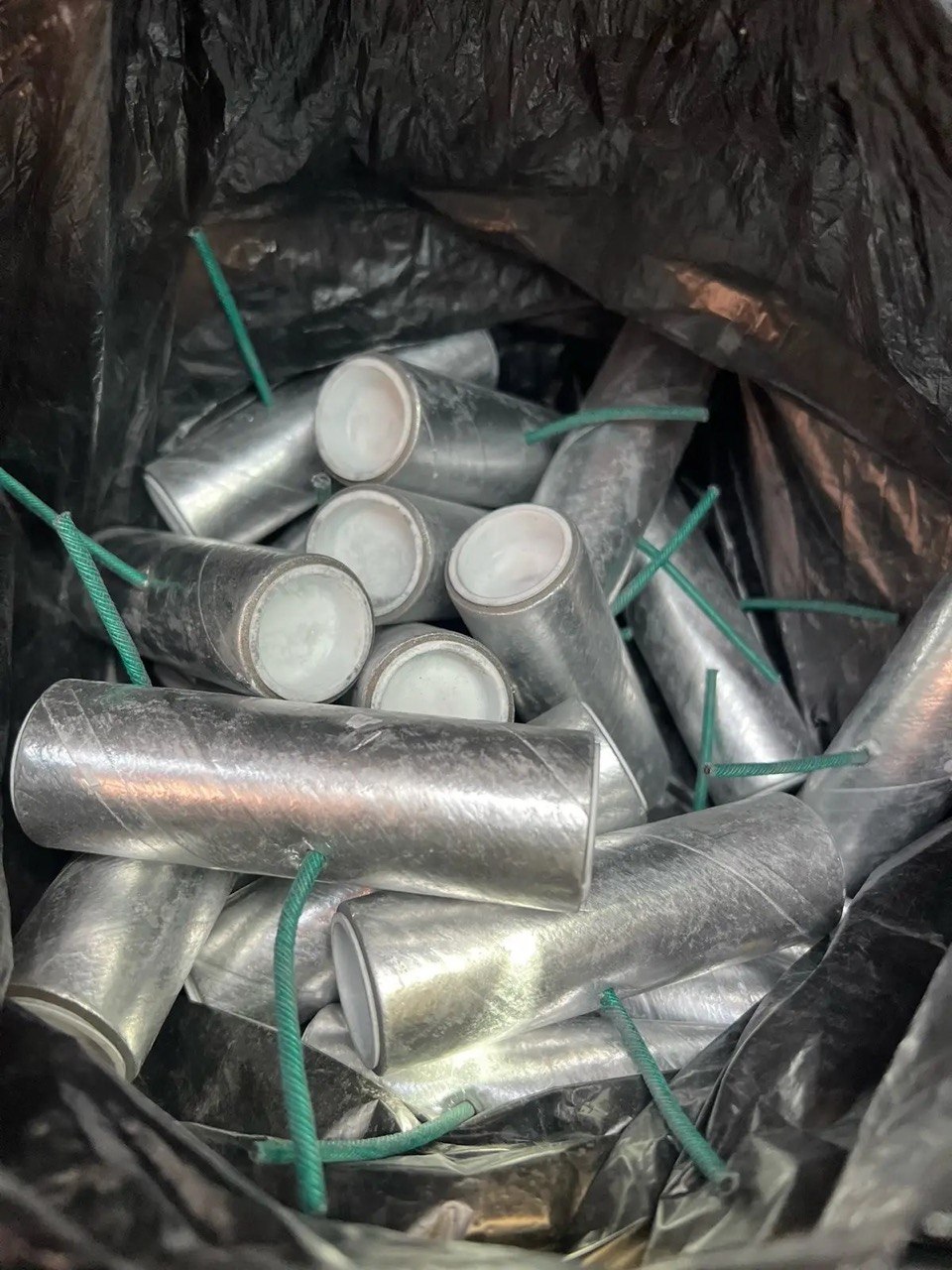
| Shape | Red sphere | Red cardboard cylinder |
| Fuse | Green visco, side-mounted | Green visco, side-mounted |
| Origin | Consumer novelty | Military simulator, later sold to civilians |
| Typical filling | Flash or black powder | Flash powder |
| Current status | Banned at full power | Banned at full power |
Both are illegal in their original form. Anything sold as a “real” M-80 or cherry bomb on the street should be treated as a homemade explosive, because that’s usually what it is.
The Lasting Legacy of the Cherry Bomb Firework
The cherry bomb firework lasted only a few decades as a legal product, yet it shaped American fireworks more than almost anything else on the shelf. Its rise showed how quickly cheap explosives could spread through a consumer market. Its fall set the 50-milligram standard and the safety-first approach that still defines legal fireworks.
It also left a cultural residue that hasn’t faded. The songs, the toilet stories, and the grandparent anecdotes keep the little red sphere alive long after it disappeared from roadside stands. For most people, that nostalgia is the right way to enjoy it.
If the history sparks your interest, stick with legal, labeled consumer fireworks from reputable sellers. Follow your local laws, and leave the original cherry bomb where it belongs: in the stories.
| CHEERY BOMB | 20 PIECES, 50 PIECES, 80 PIECES, 1K PIECES BOX |
|---|
Be the first to review “Cherry Bomb Firework”
Related products

CAKES
FIREWORKS
FIREWORKS
FIREWORKS
FIREWORKS
FIREWORKS
FIREWORKS
FIREWORKS
Reviews
There are no reviews yet.