
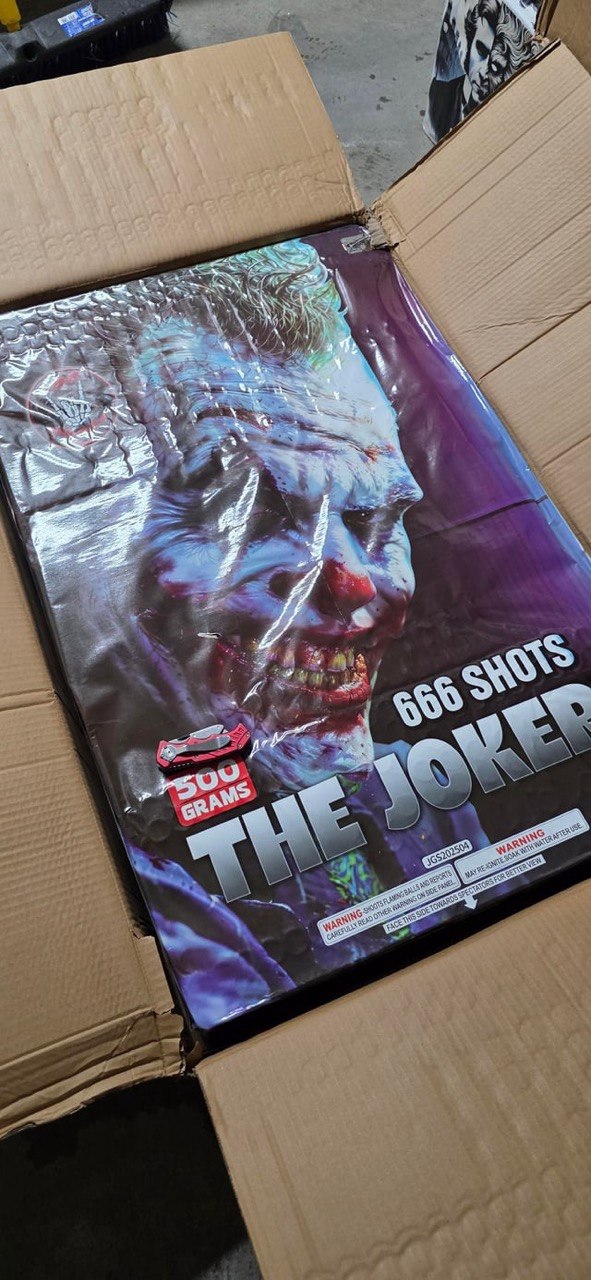
The Joker 1000 Shot Firework
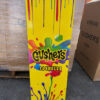
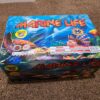
$350.00
The sound is where these cakes split opinions. Many thousand-shot products lean hard on whistles and crackle, producing a continuous, sharp noise. That’s great for a finale, but think about pets and neighbors. If noise is a concern, look for a lower-noise variant, which some retailers now stock.
Few consumer fireworks like the joker 1000 shot firework get people talking at a backyard party like a thousand-shot cake. When someone lights one, conversations stop and phones come out. The barrage keeps going long after a typical 25-shot cake would have finished.
This review covers what the Joker-style 1,000-shot barrage delivers, how its pacing and effects hold up, and what sits inside the box. It also addresses the “how to make it” question, which comes up often. The answer is less exciting than some people hope, but it explains why these cakes cost what they do and why you should buy one rather than attempt to build one.
The Legend of the Joker 1,000-Shot Firework
The appeal of the joker 1000 shot firework comes down to one thing: endurance. Most consumer cakes are built around intensity, packing color and noise into 20 to 60 seconds. A 1,000-shot barrage takes the opposite approach. It gives you a long, crackling, whistling run that feels more like a small professional show than a single item.
The “Joker” name fits the personality of these cakes. They are loud, a bit chaotic, and designed to keep an audience guessing. Sellers often market them as finale pieces, and that is how most buyers use them: as the last thing lit on New Year’s Eve, Bonfire Night, or a wedding send-off.
Their reputation grew mostly through word of mouth and short video clips. A thousand small tubes firing in quick succession looks impressive on camera, and the long runtime makes it easy to share. That said, popularity has also made the category crowded, with many brands selling similar cakes under different names. Quality varies, so the label “1,000 shots” alone doesn’t guarantee a good show.
Before buying, check that the product is certified for consumer sale where you live. In the UK, for example, these cakes are usually classed as Category F2 or F3, and the category determines the minimum safe viewing distance.
Performance Analysis: Visual Effects and Pacing
A 1,000-shot cake lives or dies on pacing. Fire the tubes too fast and the whole thing is over before guests have stepped outside. Fire too slowly and it becomes repetitive. The better versions of this firework strike a middle ground and break the run into recognizable phases.
Color Palette and Pyrotechnic Patterns
These barrages rely on small-bore tubes, so you won’t get large peony bursts like you would from a 30mm cake. What you get instead is a dense ceiling of small effects at relatively low altitude. Typical effects include:
- Red and green tails: short rising stars that build a colorful wall
- Crackling stars: bursts that end in rapid popping
- Whistles: a signature sound in many thousand-shot cakes
- Gold and silver glitter: a strong visual finish in darker skies
- Fanned patterns: angled tubes that spread shots in a V or W shape
The fanned patterns matter more than people expect. A straight-up cake looks like a column, while a fanned one fills more of the sky and reads better for a crowd standing at a distance.
Duration, Rhythm, and Sound Profile
Expect a runtime of roughly 60 to 120 seconds, depending on the brand and how the shots are grouped. Some cakes fire in bursts of several shots at once, which shortens the run but makes each moment heavier. Others fire one after another for a steady, rolling rhythm.
The sound is where these cakes split opinions. Many thousand-shot products lean hard on whistles and crackle, producing a continuous, sharp noise. That’s great for a finale, but think about pets and neighbors. If noise is a concern, look for a lower-noise variant, which some retailers now stock.
Anatomy of a Mega-Barrage: Internal Components
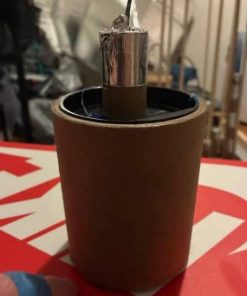
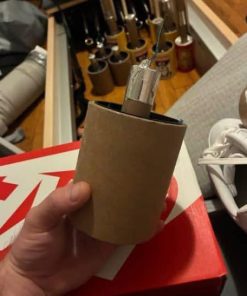
If you cut a used thousand-shot cake open, which is reasonably safe only once it has been fully spent and soaked in water, you’d find something surprisingly simple: a large block of small cardboard tubes glued together in rows. The complexity lies in how those tubes are linked and how the whole block holds together while firing.
The main parts are:
- Tube matrix: many small-diameter paper tubes, usually arranged in several connected sections
- Lift charge: a small amount of powder at the base of each tube that propels the effect upward
- Effect component: the star, whistle, or crackling element that gives each shot its look and sound
- Clay or plug layer: seals the base and helps stop flame from spreading in the wrong direction
- Internal fuse chain: connects tubes in a set sequence so they fire one after another
- Outer wrap and base board: holds the block together and keeps it stable on the ground
The key point is that every tube must fire in order without the sections igniting all at once. That control separates a two-minute display from an instant, dangerous flash. It’s also why the internal design is handled by licensed manufacturers with specialized equipment and testing, not something that gets improvised.
Engineering the Joker: Step-by-Step Construction
Here’s the straight answer to “how to make it”: you shouldn’t, and in most countries you legally can’t without a manufacturing license. Making explosive or pyrotechnic articles at home is a criminal offense in the UK, US, EU, and Australia, and it injures hobbyists every year. I’m not going to give formulas, quantities, or assembly steps. What follows is an overview of how licensed factories approach the job, which also helps explain how to judge a cake when you buy it.
Professional production broadly follows these stages:
- Design and approval: the shot count, angles, and timing are planned, and the design has to meet the safety standards required for its category.
- Component manufacturing: tubes, effects, and fuses are made separately in controlled facilities with strict limits on how much material is in any room.
- Assembly: sections are put together by trained workers following documented procedures.
- Testing: batch samples are fired to check timing, height, and debris.
- Certification and labeling: the finished product receives its category, safety distances, and instructions.
Fusing Techniques for 1,000 Consecutive Shots
Timing a thousand shots is the hardest engineering problem in this kind of cake. Manufacturers split the block into sections and use controlled fuse links between them, so one section reliably hands off to the next. The goal is consistency: no gaps, no simultaneous ignition. For buyers, the practical takeaway is that cheap cakes with poor fusing are the ones that stall halfway or pop several sections at once. Reviews mentioning “dead tubes” or “long pauses” usually point to this problem.
Stability and Reinforcing the Outer Casing of the joker 1000 shot firework
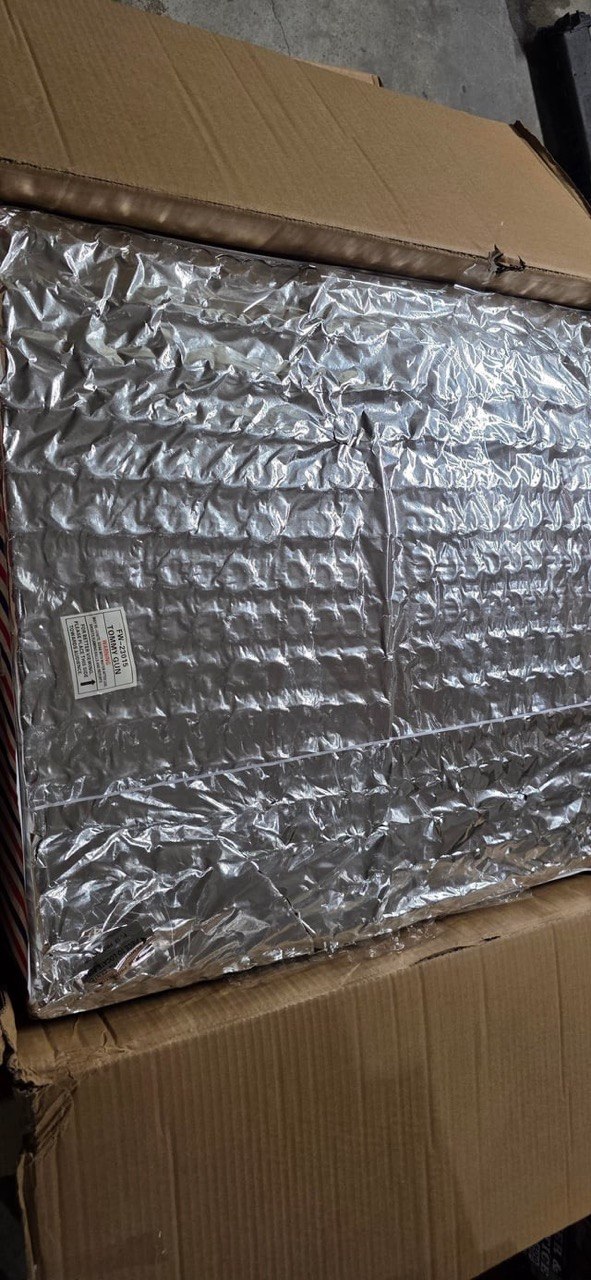
A firing cake produces recoil with every shot, and a thousand shots add up. Factories counter this with a wide base board, tight external wrapping, and sometimes outer cardboard sleeves. A well-built cake shouldn’t shift, lean, or tip at any point. When you unbox one, check that the base is flat, the wrap is intact, and there’s no water damage. Any sign of damage means the cake should go back to the seller instead of onto your lawn.
Safety Protocols for Large-Scale Pyrotechnics
Long cakes create a specific risk: people get impatient or curious when the show seems to pause. Most firework injuries happen at close range, and approaching a cake that looks finished but isn’t is a classic mistake. A clear set of rules helps.
Before lighting:
- Read the label and follow the minimum spectator distance, which is often 25 meters for F3 products
- Set the cake on firm, level ground, ideally on a board, away from buildings, trees, and parked cars
- Check wind direction so debris drifts away from the audience
- Keep a bucket of water or a hose nearby
During and after:
- Light at arm’s length with a portfire or long lighter, then walk away briskly
- Never lean over the cake
- If it stops early, wait at least 30 minutes before going near it
- Soak the spent cake in water overnight before disposal
Alcohol and fireworks are a bad mix, so pick one sober person to handle lighting. If children are attending, keep them behind an adult line, not just “far enough back.”
Finally, check your local rules. Many places limit firework use to certain dates and hours, and councils can fine people who set them off outside those windows.
Final Verdict On the joker 1000 shot firework: Value and Display Impact
So is the joker 1000 shot firework worth buying? For most people planning one standout moment, yes. It delivers runtime that would otherwise require several smaller cakes, and lighting one fuse is much safer than running between multiple items in the dark. As a finale, it’s hard to beat for the money.
The trade-offs are real, though. The effects are small-bore, so it won’t match the large aerial breaks of a 30mm cake or a professional mortar show. The constant whistling and crackle can feel repetitive to some viewers, and noise-sensitive neighbors will notice. Build quality also varies widely between brands, so buy from an established retailer who stores stock properly and can tell you its category.
A sensible approach is to pair it with one or two larger-bore cakes: open with color and height, then let the thousand-shot barrage close the night. As for making one yourself, skip it entirely. The genuine skill in these products lies in licensed factories with testing and safety controls that no home setup can match. Buy a well-reviewed cake, follow the label, keep your distance, and enjoy the full two minutes of noise from where you should be: well back, watching the sky.
Be the first to review “The Joker 1000 Shot Firework”
Related products
FIREWORKS
FIRECRACKER
FIREWORKS
FIREWORKS
FIREWORKS
FIREWORKS
Reviews
There are no reviews yet.