
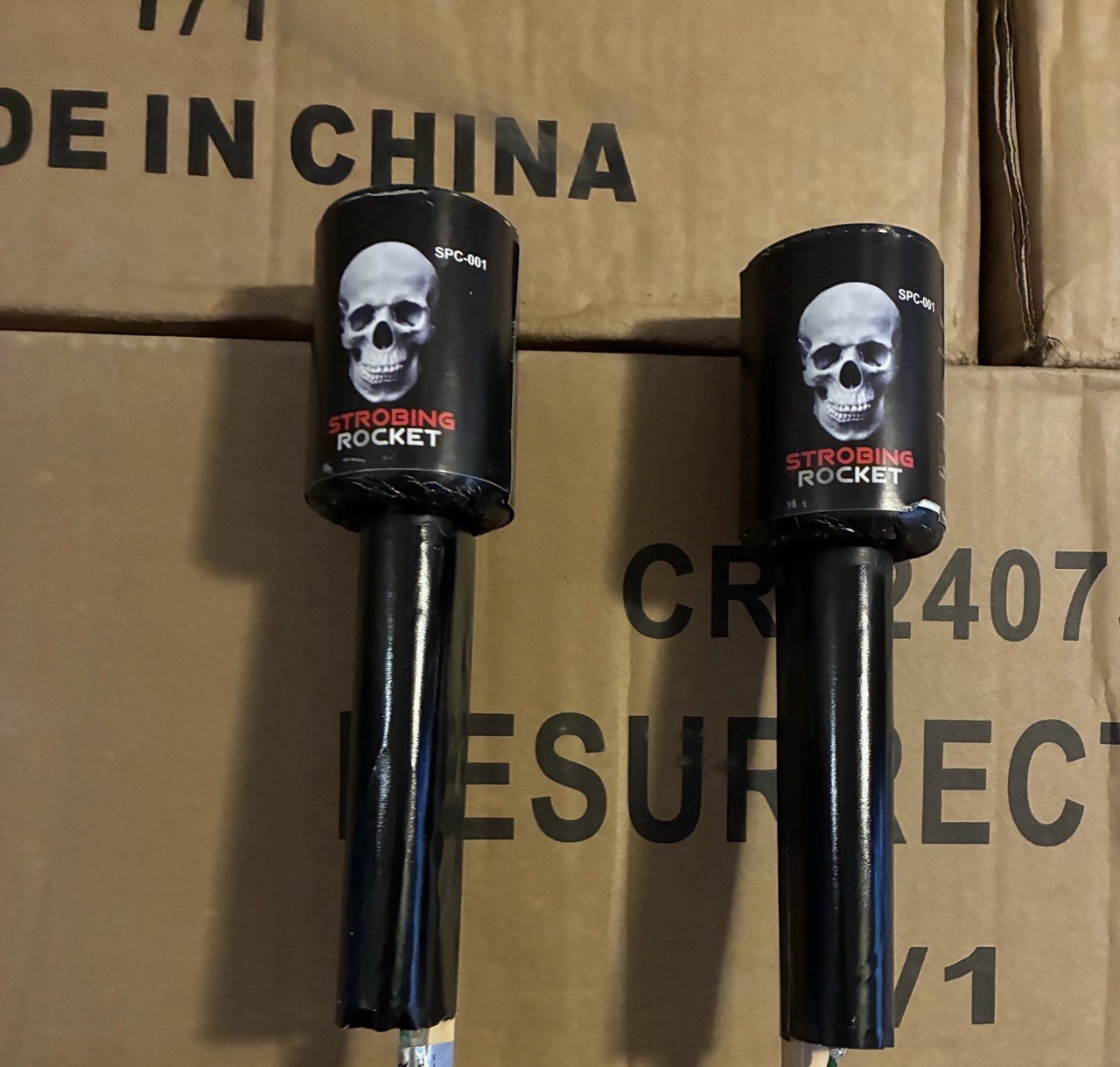
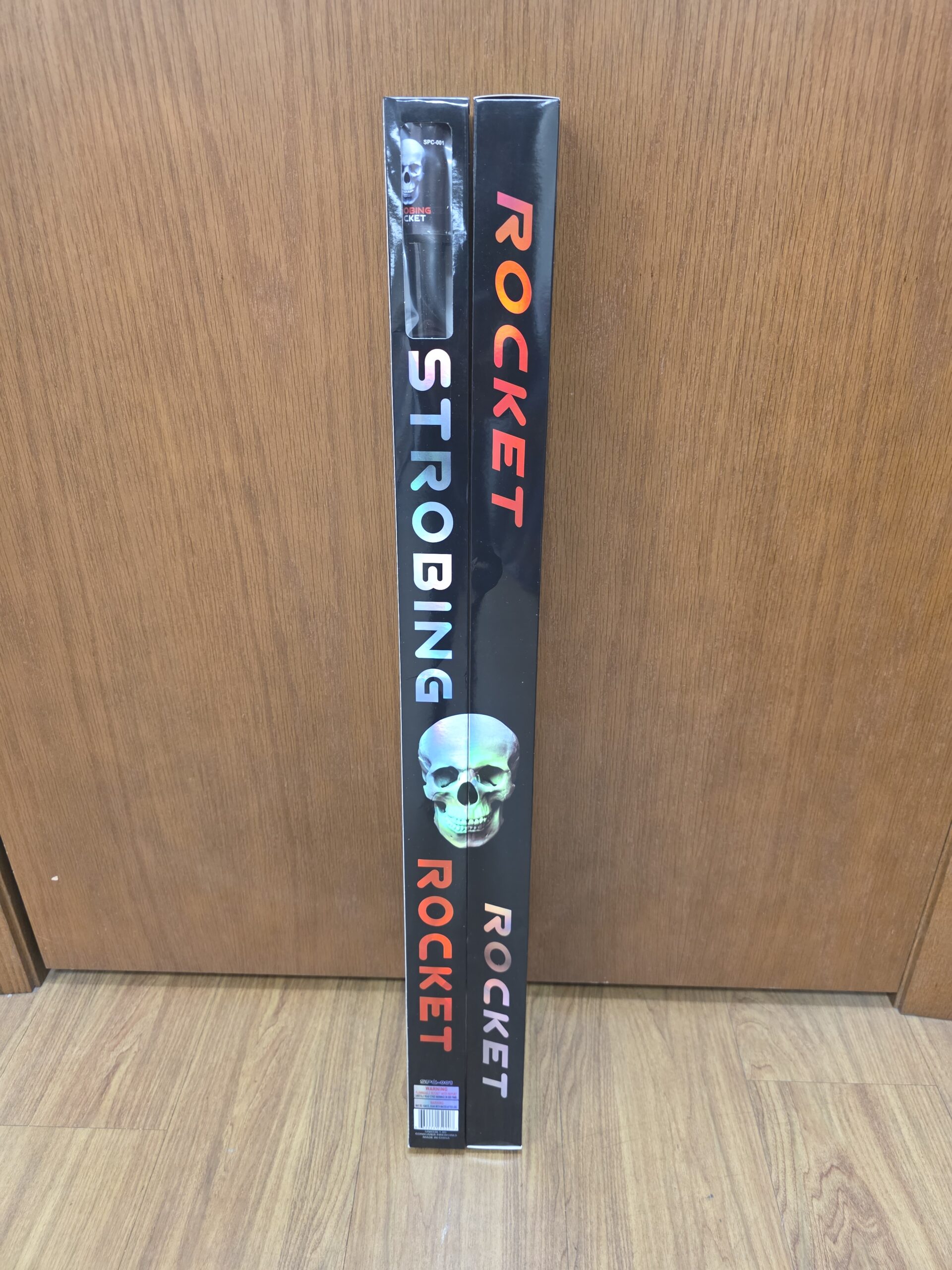
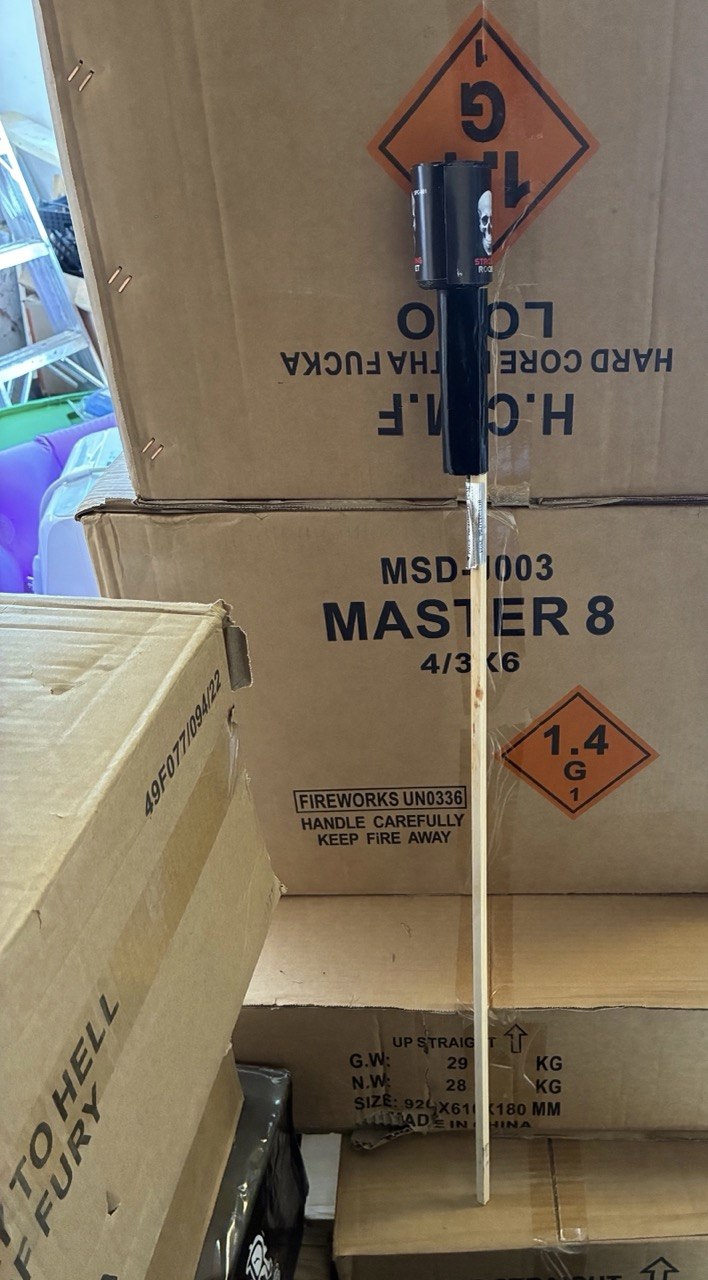
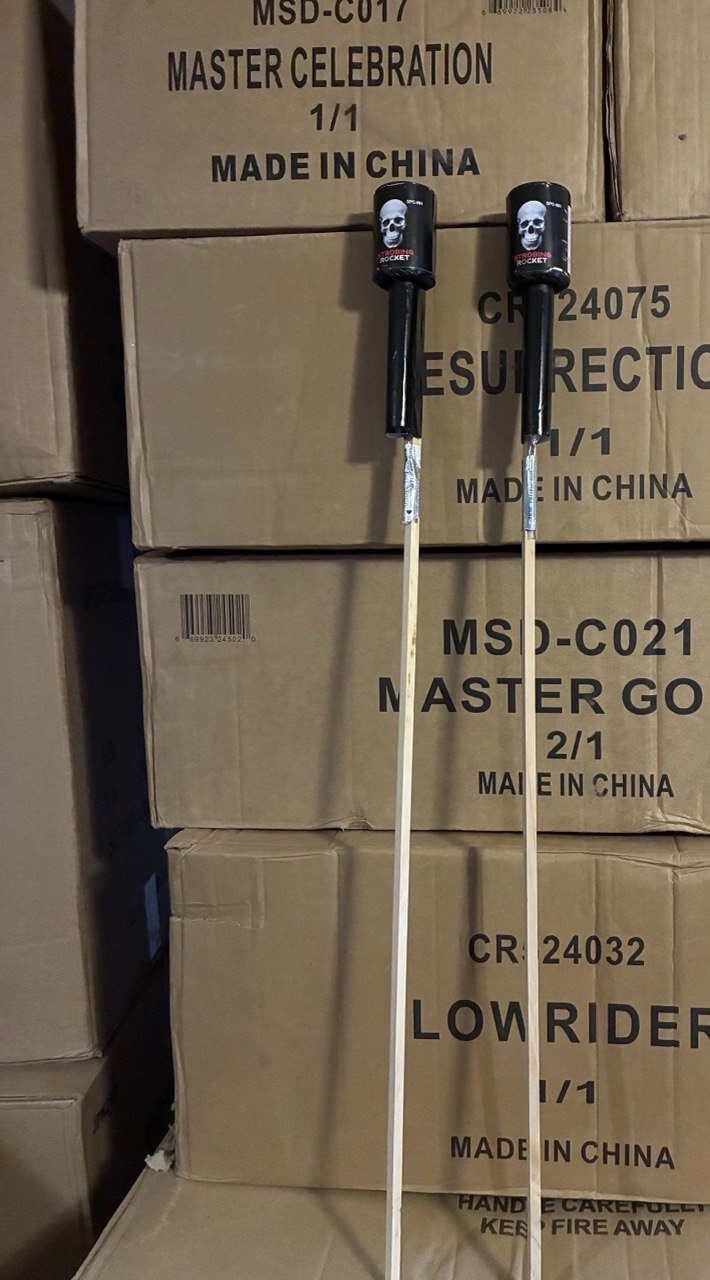
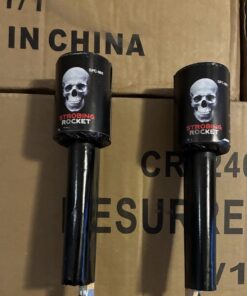

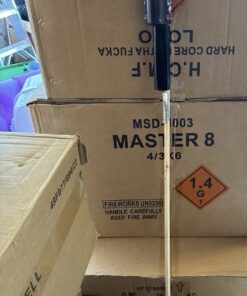
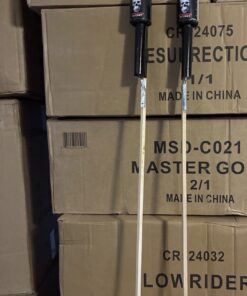
strobing rocket

Price range: $70.00 through $500.00
A rocket carries its own engine. A cardboard motor packed with propellant burns for a second or two, pushing hot gas out a nozzle at the base. The rocket keeps accelerating as long as that fuel burns, which is why you see it climb on a continuous tail of sparks rather than popping upward all at once.
A strobing rocket and an artillery shell can cost about the same on a fireworks store shelf, yet they put on very different shows. One climbs on a visible trail and ends in flickering sparkle. The other launches from a tube with a hard thump and opens into a full, round break. If you’re trying to decide which deserves a place in your next display, the differences go well beyond “one has a stick.”
The right choice depends on your space, your audience, and the kind of moment you want to create. A backyard with neighbors 40 feet away calls for different decisions than a farm field with 300 feet of clearance. Budget matters too, because rockets and reloadable shells spend your money in very different ways.
What follows is a practical comparison of how each one works, what it looks and sounds like, how to set it up safely, and when each makes sense. No hype, just the details that actually affect your show.
Core Mechanics Of Strobing Rocket and Launch Dynamics
These two products get into the sky through completely different physics, and that shapes everything else about them: height, accuracy, setup, and how they fail.
Rocket Propulsion and Stick Stabilization
A rocket carries its own engine. A cardboard motor packed with propellant burns for a second or two, pushing hot gas out a nozzle at the base. The rocket keeps accelerating as long as that fuel burns, which is why you see it climb on a continuous tail of sparks rather than popping upward all at once.
The wooden or plastic stick works like the feathers on an arrow. It moves the center of pressure behind the center of mass, so air resistance keeps the nose pointed up. Without it, the rocket would tumble. This also explains why rockets drift: any crosswind pushes on that long stick, and the rocket weathercocks into the wind. A 10 mph breeze can carry a rocket noticeably off its vertical path.
Mortar Launch and Internal Lift Charges
An artillery shell has no engine. It sits in a mortar tube on top of a lift charge, a small packet of black powder. When the fuse reaches that charge, it burns fast and builds pressure under the shell, firing it out like a cannonball. All acceleration happens inside the tube in a fraction of a second.
A separate time fuse lights at launch and burns while the shell coasts upward. When it reaches the burst charge near peak height, the shell breaks open. Because the shell is a heavy, compact ball with no stick, wind affects it far less, and its height is more consistent from shot to shot.
Visual Aesthetics and the Strobe Effect
Here’s where the strobing rocket earns its fans. Strobe stars contain chemical compositions that burn in an oscillating cycle: a dark, smoldering phase builds heat until the mixture flashes brightly, then drops back to dark. Each star blinks on and off several times per second, and a burst of dozens of them creates that shimmering, glitter-like crackle of light hanging in the sky.
On a rocket, strobe effects often appear in two places. Some rockets strobe during the climb, blinking as they rise, while others save the strobes for the burst at the top. The ascent itself is part of the show, and audiences tend to track it with their eyes, which builds a little anticipation before the payload opens.
Artillery shells play a different visual game. Their strength is symmetry. A good shell opens into a round peony, a chrysanthemum with trailing tails, a willow, or a crossette that splits into a cross pattern. Some shells include strobe stars too, but the overall look is fuller and more structured than most rocket bursts.
A rough way to think about it:
- Rockets: a moving trail plus a smaller, often looser burst; strobes feel intimate and sparkly
- Shells: a static launch followed by a larger, rounder, more symmetrical break
- Both: color quality depends heavily on the manufacturer, not the format
Acoustic Profiles Of strobing rocket : Whistles vs. Thumping Breaks
Sound gets underrated in display planning, but it shapes how the show feels as much as color does.
Rockets are relatively quiet at launch. The motor produces a rushing hiss, and many models add a whistle composition that screams on the way up. The break at the top is usually a soft pop or crackle, with strobes adding a faint sizzling texture. For neighborhoods with pets or small children, that gentler profile is a real advantage.
Shells are loud twice. First comes the deep thud of the lift charge, a sound you feel in your chest when you’re standing near the line. Then a second, sharper report as the shell bursts overhead. Some shells add salutes or crackling tails that turn the break into a rolling series of bangs.
If your audience wants the “big show” feeling, shells deliver it. If you’re trying to keep complaints down, rockets with strobe or glitter effects are usually the kinder choice. Check your local noise ordinances either way, since some towns restrict hours as well as product types.
Safety and Setup Considerations
Both products are safe when used as labeled, and both cause injuries when they aren’t. The risks just look different.
Debris Paths and Fallback Zones
Every rocket comes back down. The spent motor, the stick, and the nose cone all return to earth, and because rockets drift with wind, the landing zone can be well downwind of the launch point. A plastic stick hitting a roof is mostly a nuisance, but a still-smoldering casing landing in dry grass is a fire risk.
Shells leave less hardware behind. The casing mostly burns or shreds at the break, raining small paper fragments and occasional unburned bits. The bigger concern with shells is a low break or a dud that falls back intact. A shell that fails to break may still be live, so never approach one for at least 20 minutes, then soak it in a bucket of water.
Practical habits for both:
- Follow the minimum spectator distance printed on the label, and add more on windy nights
- Position the audience upwind so smoke and debris blow away from them
- Water down dry ground and keep a hose or extinguisher within reach
- Walk the fallout zone the next morning for anything unburned
Mortar Tube Integrity and Rocket Launchers
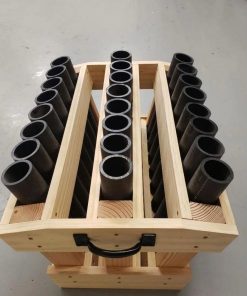
Most serious shell accidents trace back to the tube. A tube that tips over can fire a shell sideways into the crowd. Bury tubes partway in sand, brace them in a rack, or use a stable weighted base. Inspect each tube before every shot: cracks, splits, or a damaged bottom plug mean it’s done. Never lean over a tube when loading, and never drop in a second shell until you’re sure the first one actually launched.
Rockets need a launcher that keeps them vertical and free to slide. A length of PVC pipe pushed into the ground, or a commercial rack, works far better than propping sticks in a bottle that can tip. Make sure the stick slides out with no binding, angle the launcher very slightly away from spectators, and keep the launch point clear of overhead branches and wires.
Cost-Efficiency and Display Planning
Price per item is misleading. What matters is how much sky time and impact you get per dollar.
Reloadable artillery kits usually come with one or two tubes and a dozen or more shells, so the per-shot cost often runs lower than rockets. You also reuse the tubes. The tradeoff is labor: someone has to load each shell, light it, and step back, which creates gaps between shots. A solo operator might fire one shell every 15 to 30 seconds.
Rockets come in assortment packs or as single, larger units. Smaller rockets are cheap but brief, while bigger rockets with strong strobe payloads can cost as much per shot as a premium shell. Their advantage is speed: you can set up a row of launchers ahead of time and fire them in quick succession for a fast-paced sequence.
A practical planning split for a 20-minute backyard show might look like this:
| Show Segment | Best Format | Why |
|---|---|---|
| Opening | Rockets with whistles | Grabs attention fast |
| Middle build | Mixed shells | Variety, rising intensity |
| Quiet interlude | Strobe rockets | Visual texture, less noise |
| Finale | Rapid shells or cakes | Maximum density |
Buying your shells and rockets from a reputable dealer matters more than squeezing out a few dollars. Cheap off-brand products are more likely to have weak lifts and inconsistent fuses.
Choosing the Best strobing rocket Firework for Your Event
Start with your space. If your launch area is tight or surrounded by houses, rocket drift and falling sticks become a real problem, and a well-braced mortar setup is often more predictable. If you have open acreage and steady weather, rockets regain their appeal because you can let them climb and wander.
Then think about audience. Families with young kids and nervous dogs usually enjoy rockets with strobe and glitter effects more than repeated booming breaks. Crowds who want spectacle will remember shell bursts.
A few quick rules of thumb:
- Choose rockets for gentler sound, visible ascent trails, sparkling strobe effects, and fast sequences
- Choose shells for larger, symmetrical breaks, better wind resistance, and lower per-shot cost
- Mix both when you want pacing, contrast, and a show that doesn’t feel repetitive
The honest answer is that most great amateur displays use both. Rockets bring motion and that hypnotic blinking sparkle a strobing rocket does better than anything else, while shells bring the scale and punch that make people gasp. Treat them as instruments in the same band rather than competitors. Plan your layout, respect the safety distances, check the forecast for wind, and you’ll put on a show people talk about long after the smoke clears. strobing rocket
| ROCKET | 2 ROCKETS, 5 ROCKETS, 8 ROCKETS, 15 ROCKETS |
|---|
Be the first to review “strobing rocket”
Related products
FIREWORKS

FIREWORKS


FIREWORKS
FIREWORKS
FIRECRACKER
FIREWORKS
FIREWORKS
Reviews
There are no reviews yet.