
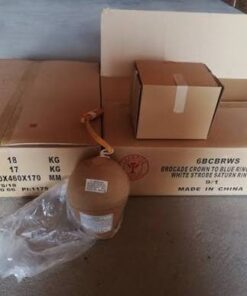
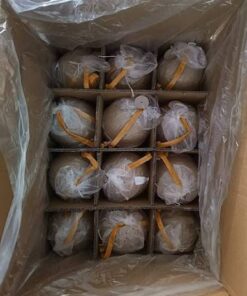
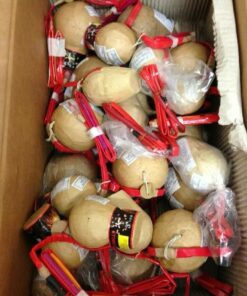
6” Inch Artillery Shells For Sale
Price range: $210.00 through $2,900.00
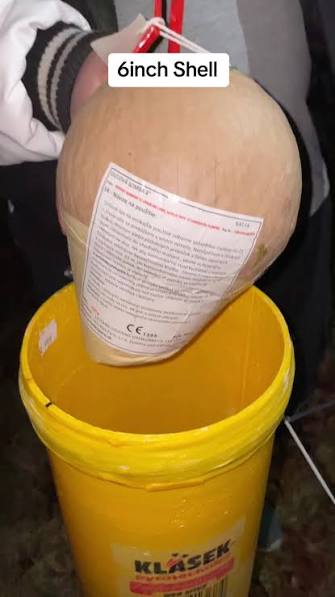
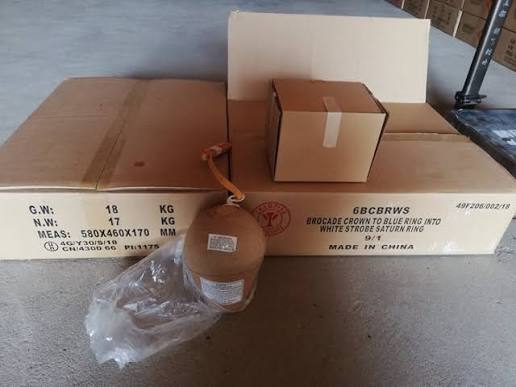
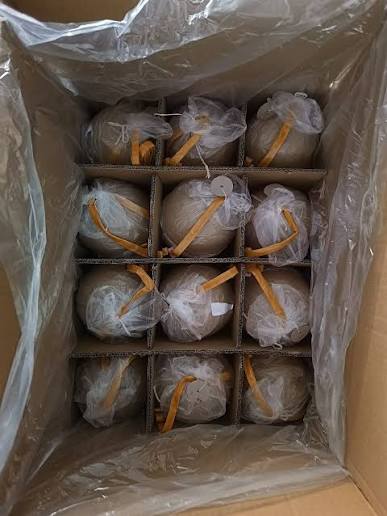
The “6-inch” label refers to the diameter of the mortar tube the shell is fired from, not the shell’s length. That single measurement drives everything else: how high the shell climbs, how wide it breaks, how much composition it carries, and how far back the audience has to stand.
Six-inch shells are where a fireworks show stops looking like a backyard party and starts looking like a civic event. If you’ve ever felt a New Year’s Eve burst in your chest before you heard it, there’s a good chance a 6-inch shell was responsible. People searching for 6 inch artillery shells for sale are usually chasing exactly that feeling: the gasp, the hang time, the moment a whole crowd goes quiet.
There’s a catch worth knowing upfront, though. These are not consumer fireworks. In the United States they’re classified as 1.3G display fireworks, which means they’re manufactured, stored, transported and fired under federal and state rules that apply to explosives. You can’t pick them up at a roadside tent, and any seller offering them to unlicensed buyers is a red flag.
What you can do is understand which effects make the best midnight moments, what the technical numbers mean, and how to work with a licensed display company to get the show you want. That knowledge turns you from a spectator into a client who asks the right questions.
The Spectacle of 6-Inch Professional Display Shells
The “6-inch” label refers to the diameter of the mortar tube the shell is fired from, not the shell’s length. That single measurement drives everything else: how high the shell climbs, how wide it breaks, how much composition it carries, and how far back the audience has to stand.
Compared with the 3-inch shells common at small-town shows, a 6-inch break doesn’t just look twice as big. Volume scales much faster than diameter, so the shell carries far more stars and burst charge. The result is a pattern that fills a huge piece of sky and hangs there long enough for people to point, react and take a photo.
That’s why display designers treat 6-inch shells as punctuation rather than filler. A typical professional show might fire dozens of 3- and 4-inch shells to build rhythm, then drop in larger calibers at key moments: the opening salute, a musical climax, and the countdown to midnight. Overusing them flattens the impact. Used sparingly, they become the moments people remember on January 1st.
There’s also a sound component that small shells can’t match. The lift charge produces a deep thump from the ground, and the burst arrives a beat later as a rolling boom. For outdoor celebrations in open spaces, like waterfronts, fairgrounds and stadium parking lots, that physical sensation is part of the appeal.
Top-Rated Visual Effects for artillery shells for sale on New Year’s Eve
Not every effect suits midnight. New Year’s crowds are often cold, packed together and watching for a short window, so the best 6-inch effects are ones that read instantly and linger. Two families of effects consistently earn their place in year-end shows.
Brocade Crowns and Long-Hanging Willows of artillery shells for sale
Brocade and willow shells are built for hang time. Their stars burn slowly and leave heavy, glittering trails that droop toward the ground, often lasting several seconds after the break. In gold or silver, they look like a chandelier being lowered over the crowd.
A brocade crown typically breaks into a dense, rounded canopy with a sparkling “crown” of trails at the top. Willows are softer and lazier, with trails that fall farther before burning out. Both pair beautifully with the countdown, because the sky stays lit while people hug, kiss and shout “Happy New Year.”
My honest opinion: if you only splurge on one effect for midnight, make it a volley of gold willows or brocade crowns fired together. Five or six breaking at once creates a wall of gold that photographs better than almost anything else. Bright, saturated colors look great live, but warm gold trails tend to survive phone cameras and video better.
Color-Changing Peonies and Crossettes
Peonies are the classic spherical burst: stars fly outward in a clean ball without trails. A color-changing peony shifts mid-burn, say from red to green to white, which gives the audience a second “wow” after the initial break. For New Year’s, many designers favor transitions that echo a theme, like a city’s colors or a brand’s palette at a corporate event.
Crossettes are more energetic. Each star splits into four smaller pieces partway through its flight, creating a crisscrossing, crackling pattern. They’re fantastic for building tension right before midnight, because the splitting adds movement and noise.
A useful pairing for the final minute:
- Crossettes during the last 30 seconds to build intensity
- Color-changing peonies on the final countdown numbers
- Brocade crowns or willows right at midnight for that long, golden hang
Technical Specifications and Burst Patterns
When you request quotes from display companies, you’ll see technical terms on their shell lists. Understanding them helps you compare options instead of nodding along. Exact figures vary by manufacturer, so treat the numbers below as general ranges rather than guarantees.
| Specification | What it means | Typical 6-inch range |
|---|---|---|
| Caliber | Inside diameter of the mortar tube | 6 inches (about 150 mm) |
| Shell type | Ball (spherical) or canister (cylindrical) | Ball shells give symmetric breaks; canisters often carry more composition |
| Break height | Altitude where the shell bursts | Commonly several hundred feet |
| Burst diameter | Width of the visible pattern | Often 400-600 feet, depending on effect |
| Effect duration | How long stars or trails burn | 2-3 seconds for peonies, longer for willows and brocades |
Ball shells, mostly made in the Asian manufacturing tradition, produce the round, symmetrical patterns most people picture. Canister shells, associated with Italian and some American makers, are cylindrical and often deliver multi-break or layered effects, such as a shell that bursts, pauses, then bursts again.
Pattern names matter too. Beyond peonies and willows, you’ll see chrysanthemums (stars with trails), rings, palms (thick comet arms from a central point) and multi-break “shell of shells” designs. Ask the company for video of the specific product number they plan to use, since the same name can look different between manufacturers.
Safety Standards for Large-Scale Pyrotechnics
Six-inch shells carry real hazards: a malfunctioning shell can break low, fail to break and fall as a “dud,” or tip in a poorly secured mortar. That’s why the safety framework around them is strict and why reputable companies follow it closely. If you’re evaluating any 6 inch artillery shells for sale, check the safety plan before the effects list.
NFPA 1123 Compliance and Setback Distances
In the U.S., most jurisdictions adopt NFPA 1123, the National Fire Protection Association’s code for outdoor fireworks displays. It covers site layout, mortar construction and securing, discharge methods, crew requirements and how to handle duds after the show.
The headline number is the setback. For vertically fired aerial shells, the standard minimum distance from the mortars to spectators is 70 feet per inch of shell diameter. For a 6-inch shell, that works out to 420 feet in every direction where the public stands. Local authorities can require more, and angled mortars or wind can shift the fallout zone.
That 420-foot radius rules out a lot of venues. A rooftop party, a small park or a private backyard almost never has room. Waterfront barges, large open fields and fairgrounds are common choices precisely because they can accommodate the distance.
Professional Licensing and Permitting Requirements of artillery shells for sale
Display shells fall under federal explosives regulation. Companies that buy, store and transport them generally need federal licensing or permits from the ATF, approved storage magazines and compliance with Department of Transportation hazmat rules for moving them.
At the state and local level, expect most of the following:
- A licensed pyrotechnic operator (shooter) in charge of the display, with state certification where required
- A display permit from the local fire marshal or authority having jurisdiction
- A site plan showing mortar placement, setbacks and fallout zones
- Proof of liability insurance, often naming the venue and municipality
- Fire department standby at larger events
Permit timelines vary widely, and New Year’s Eve is peak season. Start conversations months ahead, not weeks.
Coordinating the Finale with 6-Inch Artillery
A finale isn’t just “fire everything.” The best midnight shows layer calibers so that smaller shells build density and noise while the 6-inch shells provide the dramatic top layer. Most professional companies now use electronic firing systems that trigger cues to the fraction of a second, which lets them sync breaks to a countdown clock or music track.
Here’s a structure that works well for a New Year’s finale:
- T-minus 60 seconds: Steady rhythm of 3- and 4-inch shells, with a crossette or two to raise energy
- T-minus 10 seconds: Pause or near-silence to let the crowd count down aloud
- Midnight: A volley of 6-inch brocade crowns or willows, fired simultaneously for a golden canopy
- First minute of the new year: Rapid layered barrage mixing color peonies, comets and salutes, ending with a final round of large shells
That deliberate pause before midnight is underrated. Silence makes the big breaks hit harder, and it gives the crowd a role in the moment instead of just watching.
When you talk to display companies, bring specifics: your venue’s dimensions, expected crowd size, budget, preferred colors and whether you want music synchronization. Ask how many 6-inch shells your budget supports and where they’ll sit in the show. A good designer will push back if you want too many large shells too early.
The search for these big shells really ends with finding the right licensed partner, not a retail listing. Pick effects that hang in the sky, respect the 420-foot setback, start permitting early and save your largest breaks for the seconds that matter most. Contact a licensed display company in your area this year, ask for their 6-inch shell videos and safety plan, and you’ll be on track for a midnight your guests talk about long after the smoke clears.
| 6'' inch | 2 PIECES, 5 PIECES, 15 PIECES, 30 PIECES |
|---|
Be the first to review “6” Inch Artillery Shells For Sale”
Related products
FIREWORKS
FIREWORKS
CAKES
FIREWORKS
FIREWORKS
FIREWORKS
Reviews
There are no reviews yet.