
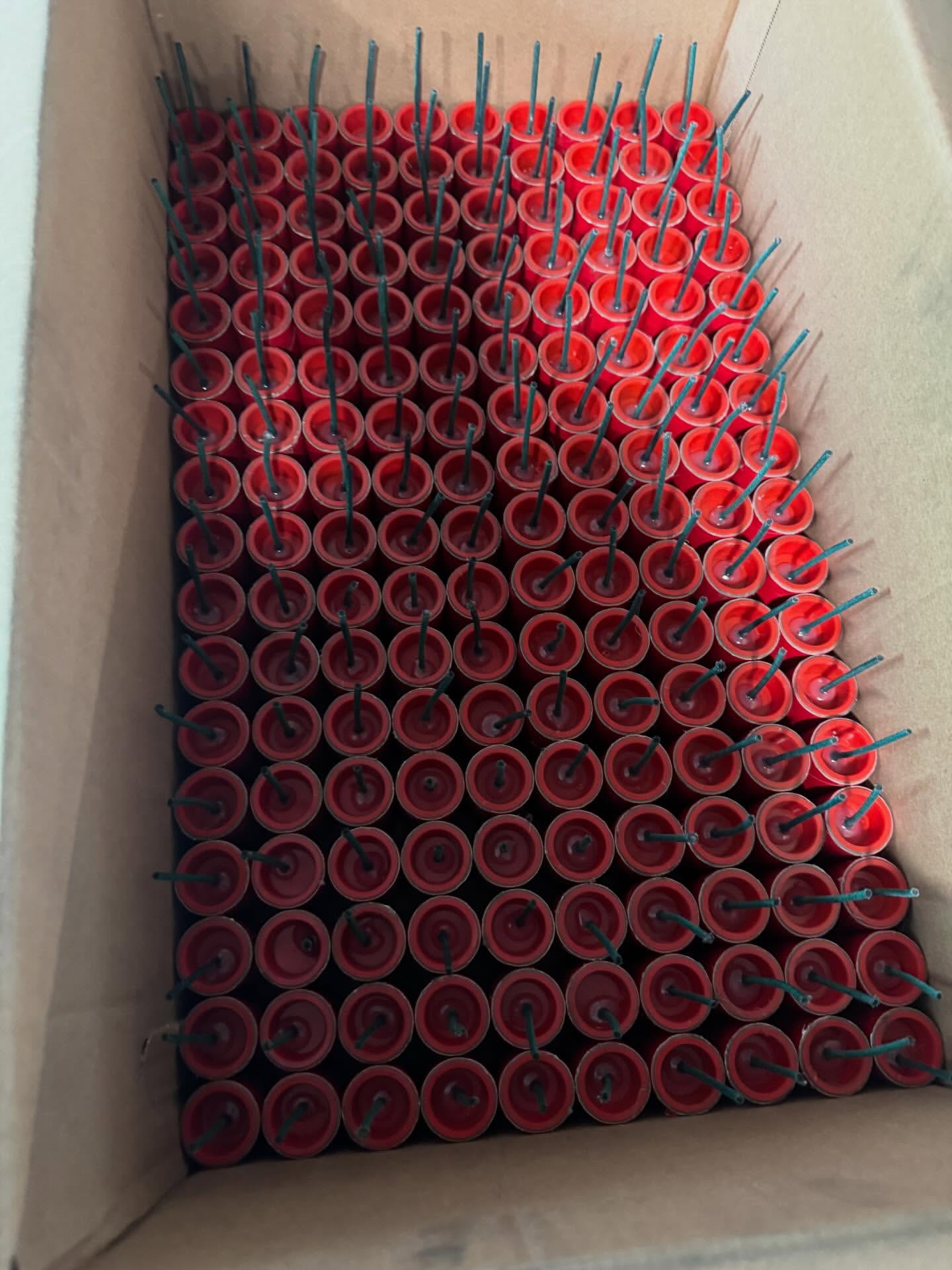
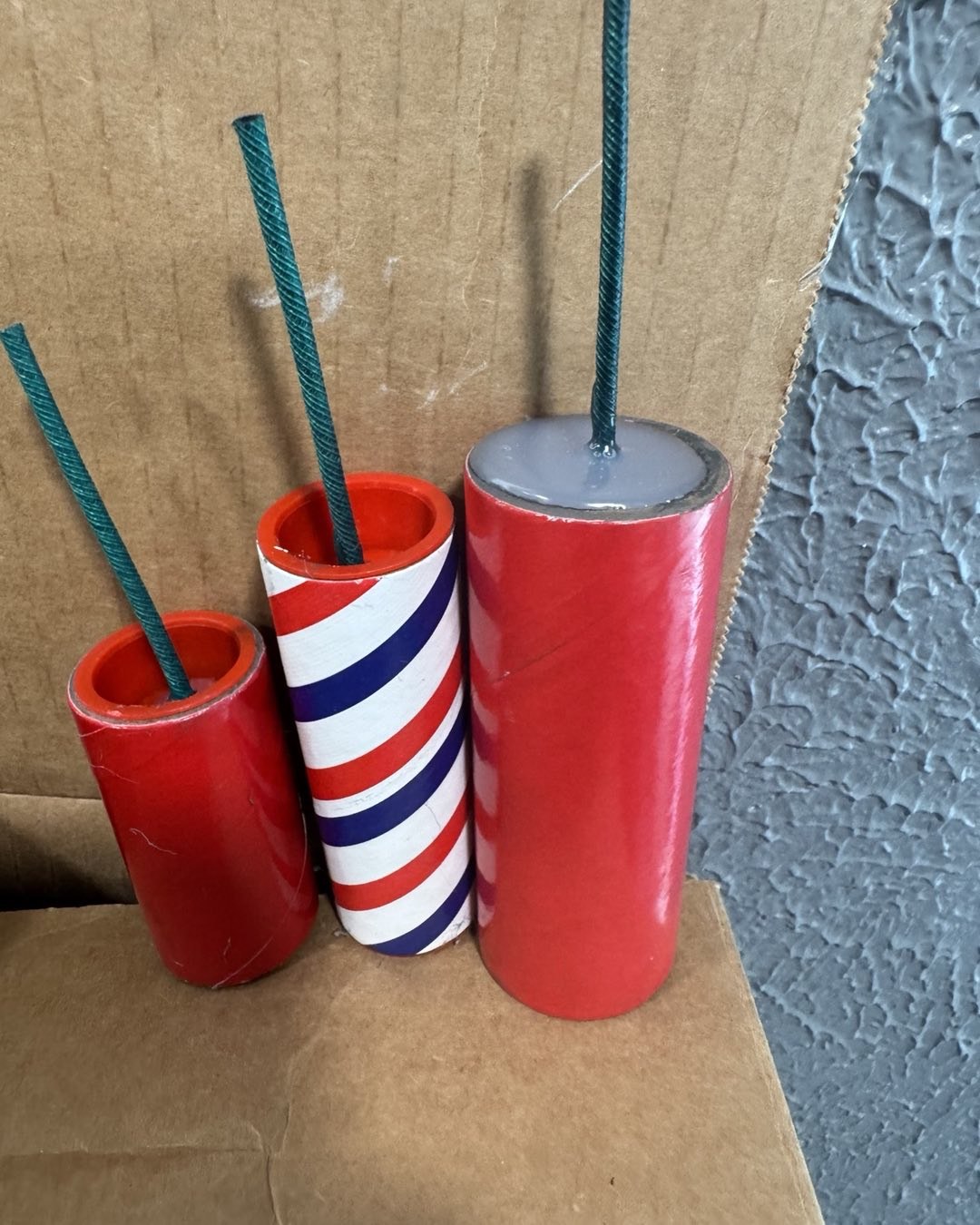
m5000 firecracker

Price range: $40.00 through $700.00
The “M” naming traces back to the M-80, which was originally a military simulator used to mimic gunfire and artillery during training. After World War II, versions leaked into civilian hands and became infamous. They were loud, powerful, and responsible for enough injuries that the U.S. Child Protection Act of 1966 effectively banned them from the consumer market.
 Search for an M5000 firecracker and you’ll find shaky phone videos, forum posts promising “the loudest thing you can buy,” and sellers working out of car trunks in July. You won’t find a manufacturer’s spec sheet, a safety certification, or a legitimate retailer. That gap tells you most of what you need to know.
This review is different from what the title might suggest. The M5000 isn’t a premium consumer firework that can be scored on build quality like a cake or a fountain. It belongs to a family of unregulated, homemade or black-market devices that bomb squads, emergency room doctors, and federal regulators have been warning about for decades.
So yes, we’ll cover quality, safety, and power. But we’ll measure them honestly: against what legal fireworks are required to meet and what actually happens when people light these things. If you’re weighing whether to buy one, or you’ve already got one sitting in a garage, the sections below should give you a clear answer.
The Legacy and Evolution of the M5000 Series
The “M” naming traces back to the M-80, which was originally a military simulator used to mimic gunfire and artillery during training. After World War II, versions leaked into civilian hands and became infamous. They were loud, powerful, and responsible for enough injuries that the U.S. Child Protection Act of 1966 effectively banned them from the consumer market.
That ban didn’t end the story. It pushed production underground. Black-market makers started inflating the numbers as a sales gimmick: M-100, M-250, M-1000, and eventually labels like M5000. The number doesn’t correspond to any measured standard. It’s marketing, meant to suggest “bigger than the last one.”
What did evolve was the risk. Many of these devices are assembled in unlicensed settings with no quality control, and the bigger names often mean more explosive material packed into the tube. Federal agencies have repeatedly classified oversized “M” devices as illegal explosives rather than fireworks, and local news reports of seized caches and serious injuries surface nearly every summer.
The short version: the m5000 firecracker isn’t a product line with a manufacturer behind it. It’s a label slapped on whatever an illegal maker produced that season.
Technical Specifications and Explosive Potential of m5000 firecracker
Here’s the honest problem with any “spec review” of this device: there are no verified specifications. No regulator tests them, no maker publishes data, and two items sold under the same name can contain wildly different amounts of material. Anyone quoting exact figures is guessing or repeating seller hype.
What can be said with confidence comes from comparing them to the legal baseline and from what investigators have reported about seized devices.
Net Explosive Content and Chemical Composition
In the United States, consumer firecrackers are capped at 50 milligrams of pyrotechnic composition under Consumer Product Safety Commission rules. That’s a tiny amount, roughly the weight of a few grains of rice, and it’s the reason legal firecrackers pop rather than detonate.
Illegal “M” devices are typically filled with flash powder in quantities far above that limit, often grams rather than milligrams. Flash powder is notoriously sensitive to friction, static, heat, and impact, which is why even licensed professionals treat it with extreme caution. In an unregulated device, the mixture may be poorly blended or contaminated, which makes its behavior unpredictable. It isn’t a “stronger firework.” It’s closer to a small bomb with a fuse.
Decibel Ratings and Shockwave Radius
You’ll see sellers claim specific decibel numbers. Ignore them, since nobody has independently tested these products. What matters more than loudness is the blast effect at close range.
When a device carrying grams of flash powder goes off in someone’s hand, it doesn’t burn the skin. It can shatter bone and amputate fingers. Emergency physicians have documented hand reconstructions and permanent hearing damage from devices in this category. Any container nearby, like a can, bottle, or mailbox, becomes shrapnel, extending the danger zone well beyond the person lighting it.
Manufacturing Quality and Casing Durability
Legitimate fireworks come from licensed facilities, carry warning labels, and are subject to batch testing. An M5000 firecracker usually has none of that. Typical red flags include:
- No manufacturer name or address on the casing
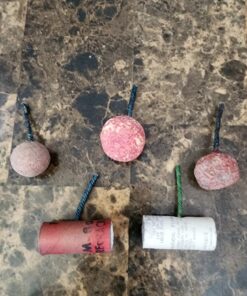
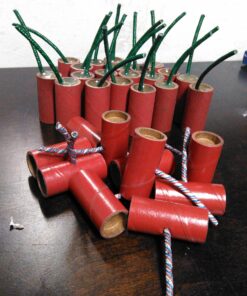
- Plain or hand-labeled tubes, often red cardboard with a crude printed logo
- Sealed ends made with glue or wax instead of factory crimping
- Fuses of varying length and thickness within the same batch
- No warning label or a label with misspellings and no regulatory markings
Casing durability actually works against the user here. A thicker, tightly sealed tube lets pressure build higher before it bursts, which increases the violence of the explosion. Weak spots in a poorly made casing can also rupture unevenly, sending fragments sideways rather than outward.
Quality, in the normal sense, can’t be judged because there’s no consistent product to judge. The only fair rating is “unknown,” and unknown is the worst possible score for anything that explodes.
Critical Safety Protocols and Risk Mitigation
The most effective safety protocol for this device is simple: don’t light it. There’s no technique that makes an illegal flash-powder device safe, and the injury data on this category isn’t marginal. It’s people losing fingers, eyes, and in some cases their lives.
If you’ve already come across one, the risk is in handling and timing, not just ignition.
Fuse Timing and Burn Rate Consistency
Legal consumer fireworks are required to have fuses that burn for a minimum period, giving the user time to get clear. Black-market devices don’t follow that standard. Reports of fuses that burn in under a second, or that appear to fizzle and then ignite moments later, are common.
That inconsistency drives a classic injury pattern: someone lights the fuse, thinks it went out, walks back to check, and the device detonates in their hand or face. With these devices, a “dud” should never be treated as a dud. Leave it alone and keep everyone away.
Storage and Handling Requirements of m5000 firecracker
Flash powder doesn’t need a flame to go off. Friction, a drop, static, or heat in a hot car or attic can be enough. That makes storing these devices at home genuinely dangerous to everyone in the building.
If you find one:
- Don’t pick it up, shake it, or try to open it.
- Keep children and pets away from the area.
- Don’t put it in household trash or soak it and toss it.
- Call your local police non-emergency line or fire department. Many departments run no-questions-asked fireworks surrender programs, especially around July 4th.
Letting trained personnel handle disposal isn’t overkill. It’s what they’re there for.
Legal Status and Regulatory Compliance Standards
In the U.S., two agencies define the line. The CPSC sets limits for consumer fireworks, including that 50-milligram cap on firecrackers. The Bureau of Alcohol, Tobacco, Firearms and Explosives treats devices exceeding consumer limits, including oversized “M” devices, as explosives. Manufacturing, selling, or possessing them without a federal license can bring federal charges, not just a local fine.
State laws add another layer. Some states ban almost all consumer fireworks, while others allow a wide range. But no state’s “fireworks are legal here” status covers an M5000. Legal consumer products in states like Pennsylvania or Indiana still have to meet federal standards, and these don’t.
Outside the U.S., the picture is similar. The UK and EU sort fireworks into categories by hazard level, with the most powerful reserved for licensed professionals. An unlabeled, uncertified explosive device doesn’t fit any consumer category in those systems either.
The practical takeaway: if a seller can’t show you a legal label and a registered manufacturer, you’re not buying a firework. You’re buying evidence.
Final Verdict: Balancing Power with Performance of m5000 firecracker
On power, the M5000 delivers far more than any consumer firework is allowed to. On quality, it scores as unknown and inconsistent. On safety, it fails outright, with unreliable fuses, sensitive filler, and no oversight at any stage. On legality, possessing one can turn a holiday into a federal case.
That’s not a balance. It’s a device where the one thing it does well, making a huge bang, is exactly what makes it dangerous.
If you want a loud, satisfying show, there are better routes. Legal firecracker strips, mortar-style aerial shells sold in states that permit them, and 500-gram cakes offer serious noise and spectacle within tested limits. Better still, a professional display gives you real shells fired by licensed operators from a safe distance.
So skip the guy selling “M5000s” out of a van. Buy from a licensed retailer, read the label, and keep your hands. Fireworks are supposed to be the part of the night you remember fondly, not the reason you spent it in an emergency room.
| FIRECRACKER | 5 PIECES, 10 PIECES, 25 PIECES, 50 PIECES, A BOX |
|---|
Be the first to review “m5000 firecracker”
Related products
FIRECRACKER
FIRECRACKER
FIRECRACKER
FIRECRACKER

FIRECRACKER
FIRECRACKER
Reviews
There are no reviews yet.